oxygen domain was triggered too early. This is usually an indicator for some code in the plugin or theme running too early. Translations should be loaded at the init action or later. Please see Debugging in WordPress for more information. (This message was added in version 6.7.0.) in /home/rdunsire/public_html/wp-includes/functions.php on line 6260wordpress-seo domain was triggered too early. This is usually an indicator for some code in the plugin or theme running too early. Translations should be loaded at the init action or later. Please see Debugging in WordPress for more information. (This message was added in version 6.7.0.) in /home/rdunsire/public_html/wp-includes/functions.php on line 6260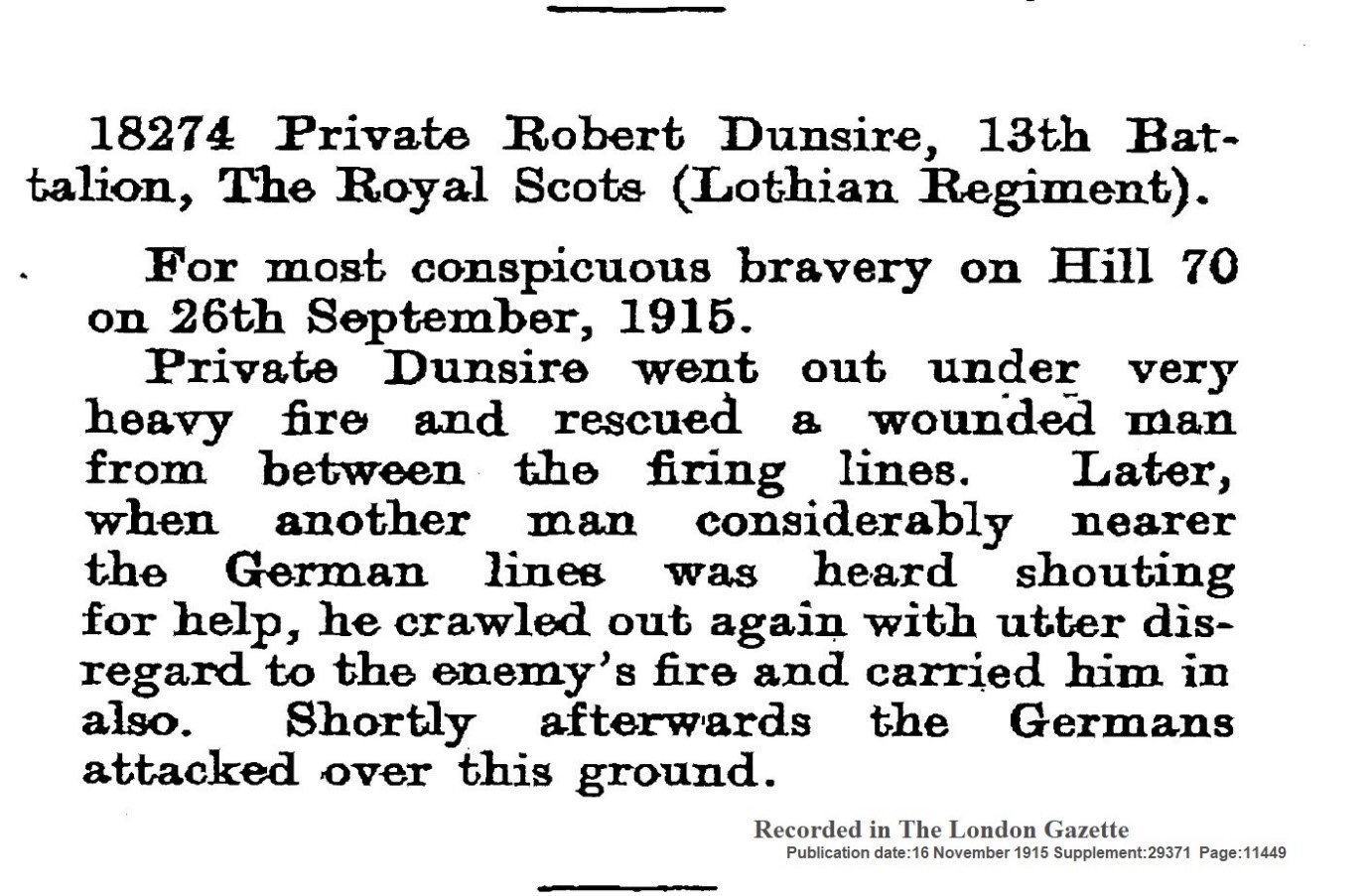
Attr: War Office Announcement of 18 November 1915
Recorded in The Third Supplement to The London Gazette, published on 18 November 1915
https://www.thegazette.co.uk/London/issue/29371/supplement/11449
Robert’s original service record documents his height as 5ft
5.5 ins (166 cms) and weight as 134 lbs (60.7 kgs). Had he been a boxer he
would have fought in the ‘lightweight’ division. His general health was
reported as ‘good’, and he scored 6/6 for each eye when his vision was tested.
Using his machine-gunner telescope Robert was able to pick out the two men he
rescued. The men he carried back were probably a deadweight and probably
weighed more than him. It was akin to carrying more than a regular hundredweight
bag of coal at pace across rough pasture while under heavy gunfire. To do this
once is remarkable; to return to do it once more, after the briefest periods of
rest, is astonishing. Robert used every fibre of his physical and mental
capability to rescue those two soldiers in the most challenging of
circumstances.
With the announcement of Robert’s award of the Victoria
Cross in The London Gazette, Robert was sent home to Denbeath on 10 days’ leave
by Colonel Maclear. The announcement followed on from earlier rumours and
reports that he had been nominated for The Distinguished Conduct Medal (DCM),
based on Robert’s letter to Kate at the end of September, describing an act of
bravery at Loos.
Kate had been alerted to impending news when the Sketch
newspaper sent a telegram on 18 November, requesting a photo of Robert and/or a
family grouping She thought it might be the award of the DCM.
The news that Robert had been awarded the Victoria Cross was
reported all over the British Isles, especially in Fife and Scotland. This
modest and understated 23-year-old volunteer soldier and miner was hurled into
the spotlight. He managed this with dignity and great awareness of how he spoke
and presented himself, remembering and appreciating his roots and upbringing,
but also knowing he would re-join his battalion in a very short time. Soon he
was off on 10 days’ leave to travel home and share his story with family and
friends. He would then travel to Buckingham Palace to receive his Victoria
Cross (VC) Medal from King George V.
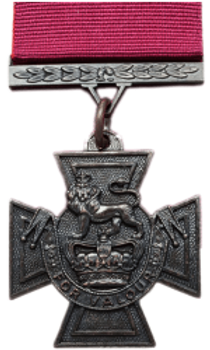
The VC is Britain's highest award for gallantry in the face
of the enemy. Recipients of the VC come from all social backgrounds and
from all over the British Empire and Commonwealth. Since its inception in 1856,
there have been 1,358 VCs awarded. This total includes three granted
to soldiers who won a second VC, and one awarded to an unknown American
soldier.
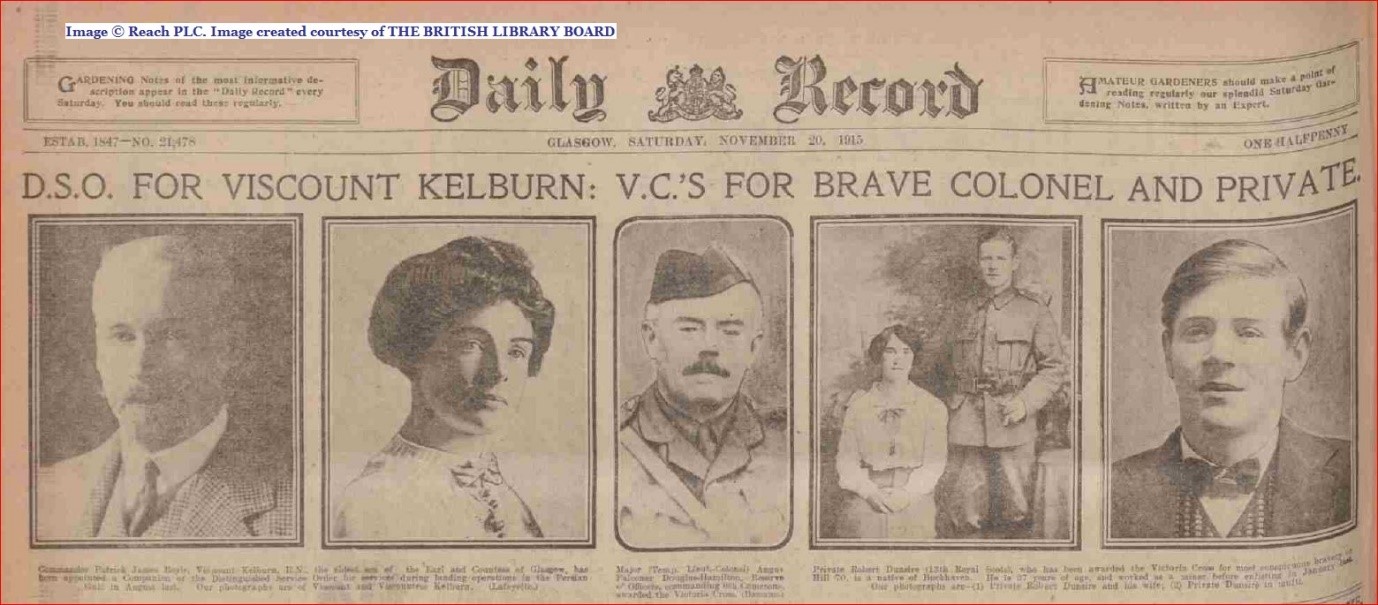
Attr: Image © Mirrorpix/Reach Licensing - Daily
Record - Saturday 20 November 1915
Image created courtesy of THE BRITISH LIBRARY BOARD.
Headlines and counterclaims abounded about his home town.
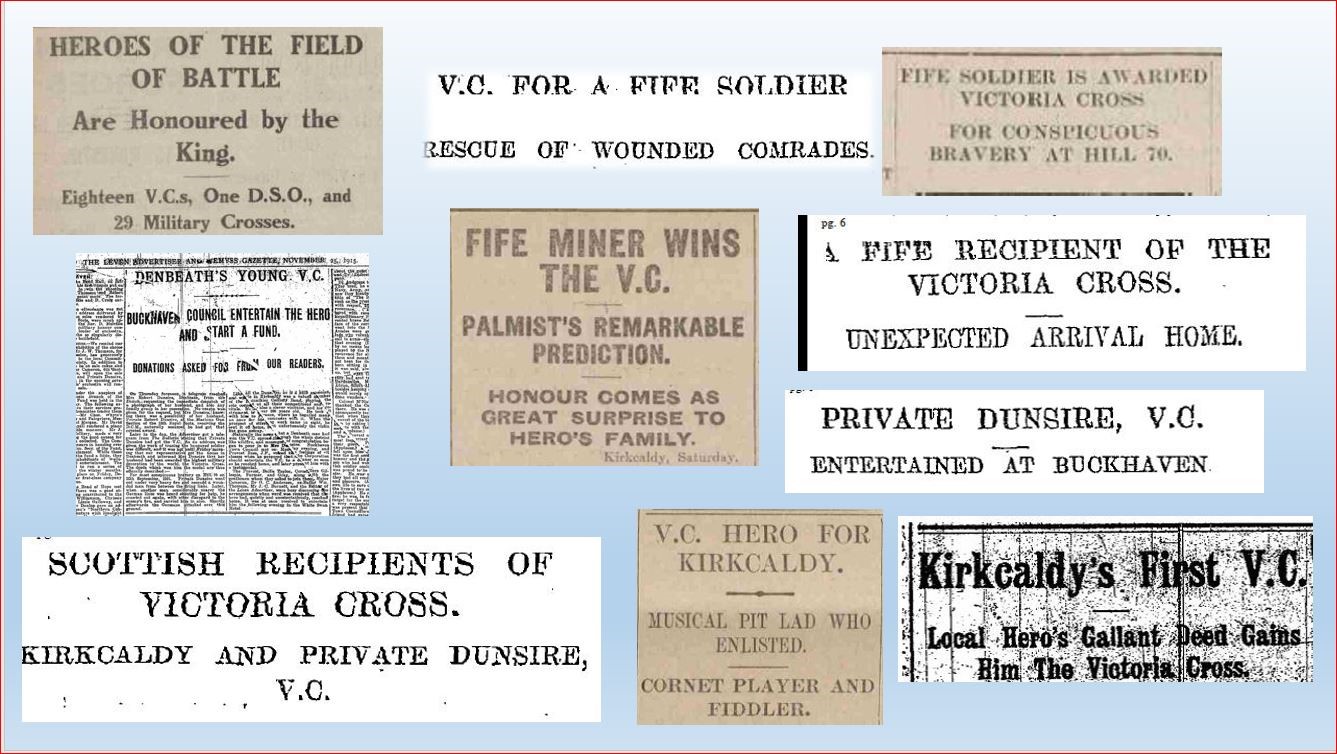
‘He was a Son, Brother, Husband, Miner and Soldier from
Fife’.