oxygen domain was triggered too early. This is usually an indicator for some code in the plugin or theme running too early. Translations should be loaded at the init action or later. Please see Debugging in WordPress for more information. (This message was added in version 6.7.0.) in /home/rdunsire/public_html/wp-includes/functions.php on line 6260wordpress-seo domain was triggered too early. This is usually an indicator for some code in the plugin or theme running too early. Translations should be loaded at the init action or later. Please see Debugging in WordPress for more information. (This message was added in version 6.7.0.) in /home/rdunsire/public_html/wp-includes/functions.php on line 6260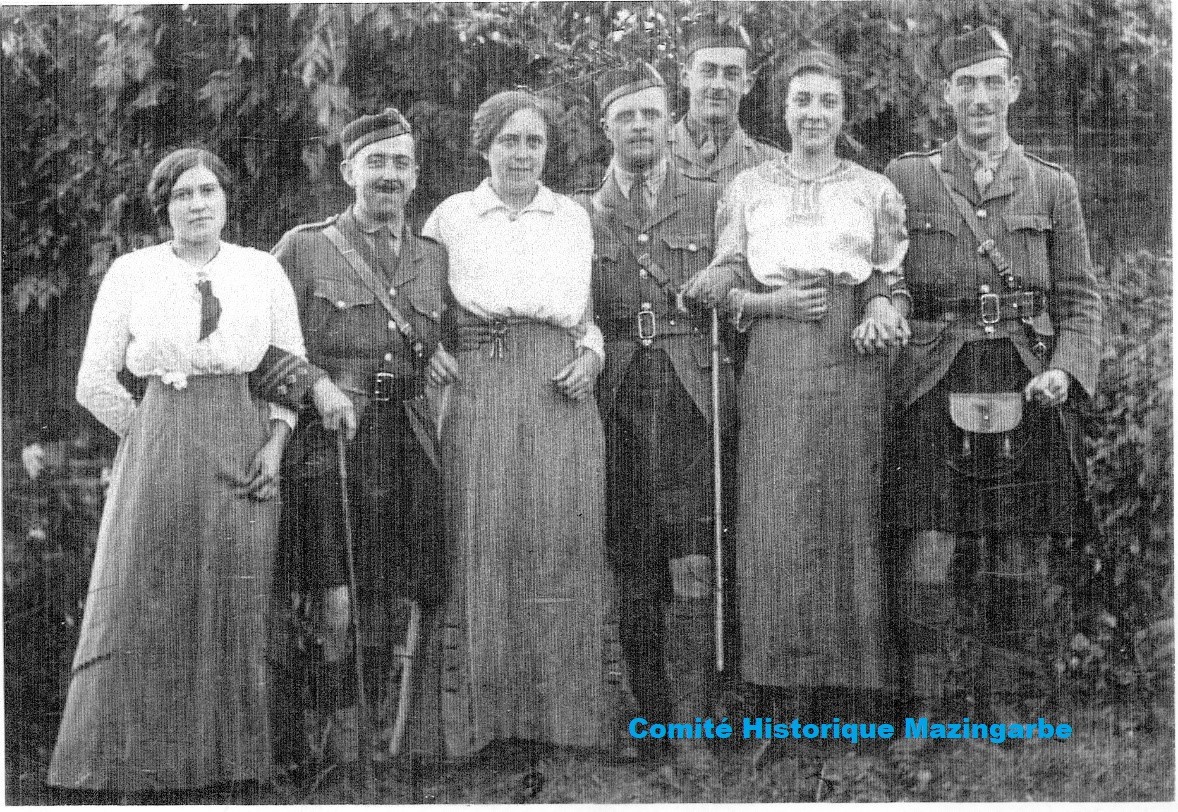
Image Courtesy of Comité Historique Mazingarbe
The people of Mazingarbe still extend the hand of friendship
to visitors who come to fill in the blanks in family history relating to World
War 1. In doing so the Mazingarbois extend the hand of friendship with the same
warmth and appreciation that welcomed our forefathers in World War 1. As a
community, they will always remember the sacrifices of British soldiers or Les
Anglais which was the common description of the time.
The front line a mile or so away had been established
quickly by the invading German Armies. French troops formed the front line of
defence till British troops and their supporting Armies of Indian and other
‘Empire’ troops arrived in Europe. They based their Field Hospital at Wattebled
Chateau in Mazingarbe
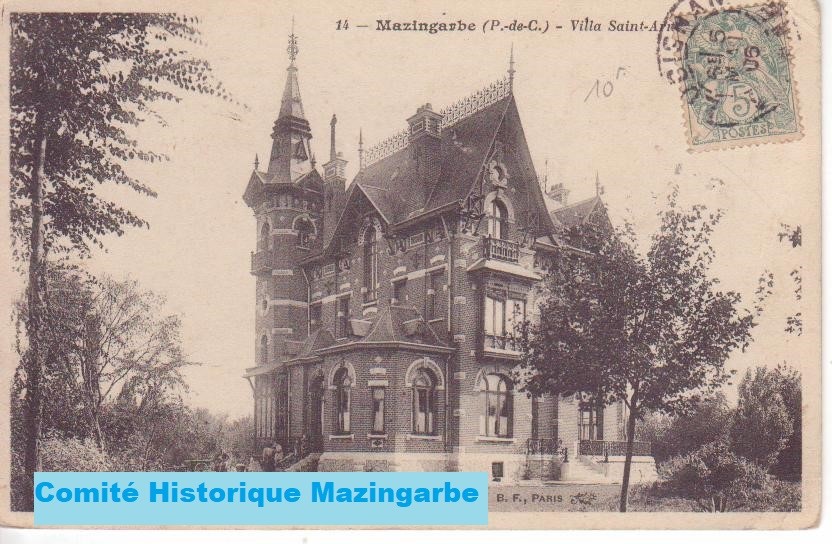
Image Courtesy of Comité Historique Mazingarbe
The people of Mazingarbe still extend the hand of friendship
to visitors who come to fill in the blanks in family history relating to World
War 1. In doing so the Mazingarbois extend the hand of friendship with the same
warmth and appreciation that welcomed our forefathers in World War 1. As a
community, they will always remember the sacrifices of British soldiers or Les
Anglais which was the common description of the time.
The front line a mile or so away had been established
quickly by the invading German Armies. French troops formed the front line of
defence till British troops and their supporting Armies of Indian and other
‘Empire’ troops arrived in Europe. They based their Field Hospital at Wattebled
Chateau in Mazingarbe
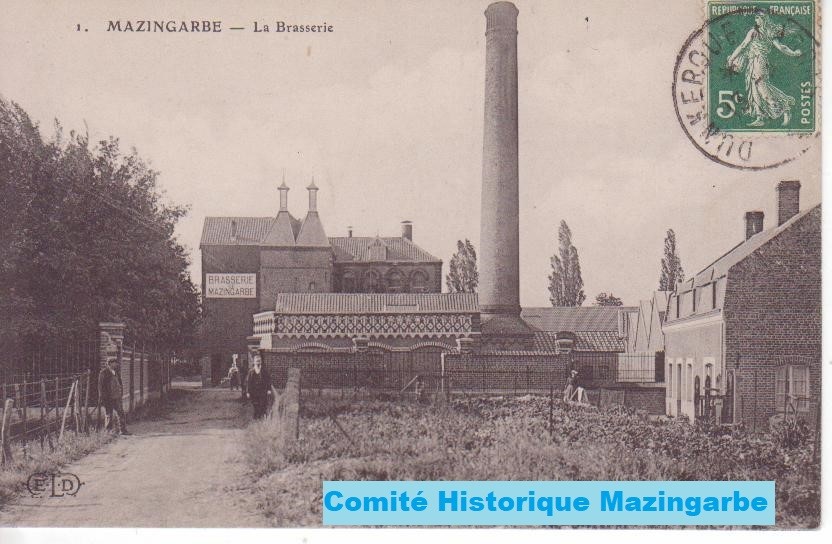
Image Courtesy of Comité Historique Mazingarbe
The brewery (pictured above) behind Villa Arnould was used
for baths by the 46th Ambulance Station, whereas the villa was used as HQ by Brigades
and the 46th Ambulance Station.
British Infantry Troops were not billeted in grand chateaux,
and many found themselves in houses like those in the image below. They would
often seek refuge and rest in the basements of houses that had been damaged or
partly destroyed by long range shelling.
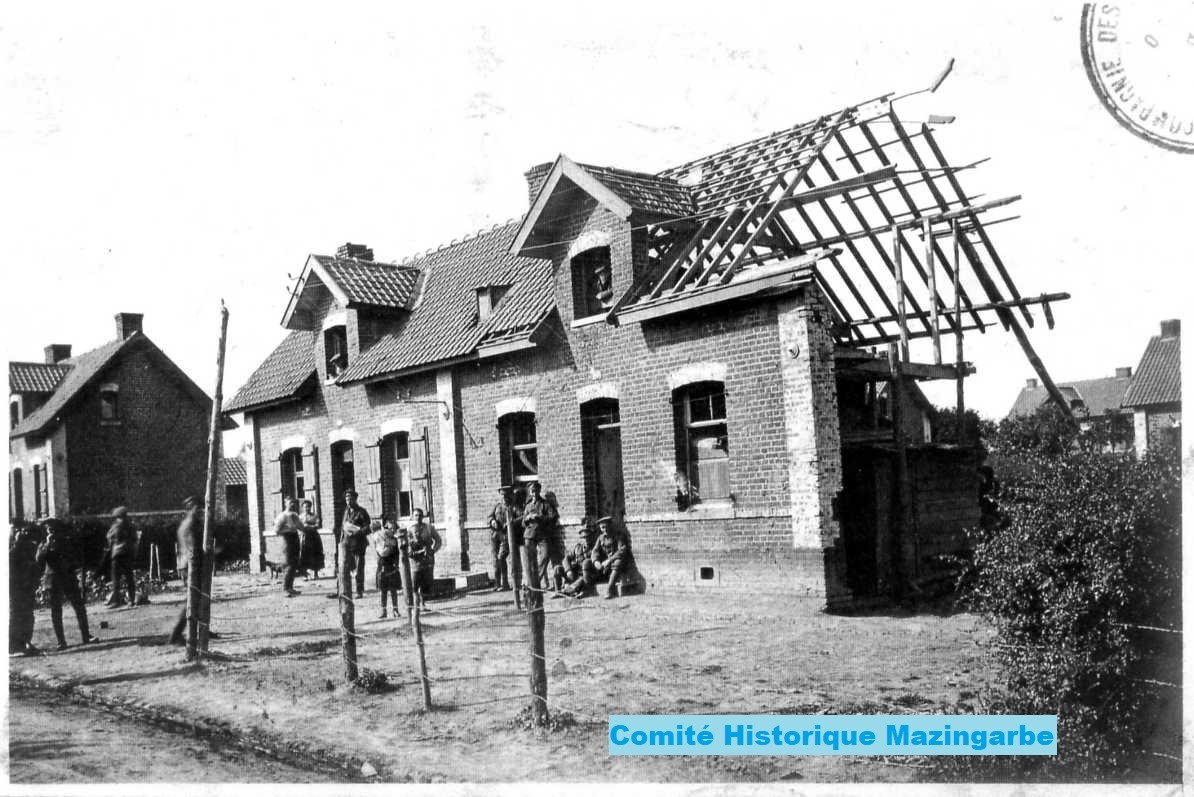
Image Courtesy of Comité Historique Mazingarbe
Ferme Dupuich, which has recently been transformed into the
Mazingarbe Cultural Centre, was often a focal point for in transit Scottish
troops. They left evidence behind in wall carvings that still exist today.
Individuals carved out their own piece of personal history.
A particularly sad example of this is the carving by Private John W
Craig, (13297) D Company, 6th Cameron Highlander. John Craig first
travelled to France on 9 July 1915, within a few days of Robert Dunsire VC. He
made it safely to Mazingarbe where he billeted at Ferme Dupuich with the
remainder of the 6th Battalion of the Cameron Highlanders between 18-30 August
1915. In this short period John, like several other soldiers, left a carved
souvenir of his stay which was uncovered during the building of the new Cultural
Centre.
Less than one month later, in September 1915, The Battalion
War Diary records that Private John Craig, Serial Number 13297, was wounded
then died from rifle shot wounds while in a working party on 18 September. John
was buried immediately at the Communal Cemetery at Noeux Les Mines.
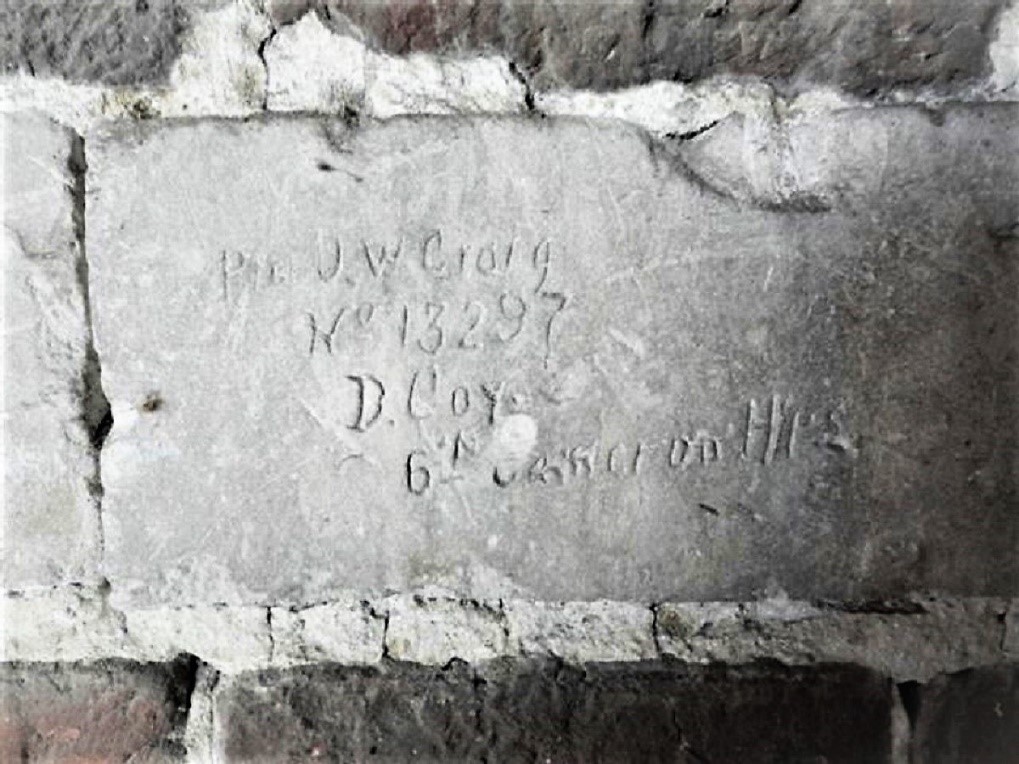
Image Courtesy of Comité Historique
Mazingarbe
The 9th Battalion of the Black Watch had two periods in
billets in Mazingarbe prior to the start of the Battle of Loos. The first
period was for a week from 17–18 August and from 1–3 September 1915. The Black
Watch also left their visiting ticket at La Ferme Dupuich.
One century later, Ferme Dupuich has hosted several World
War 1 exhibitions that I have enjoyed visiting. The life and soldiering of
Robert Dunsire VC has been a regular feature of these exhibitions.
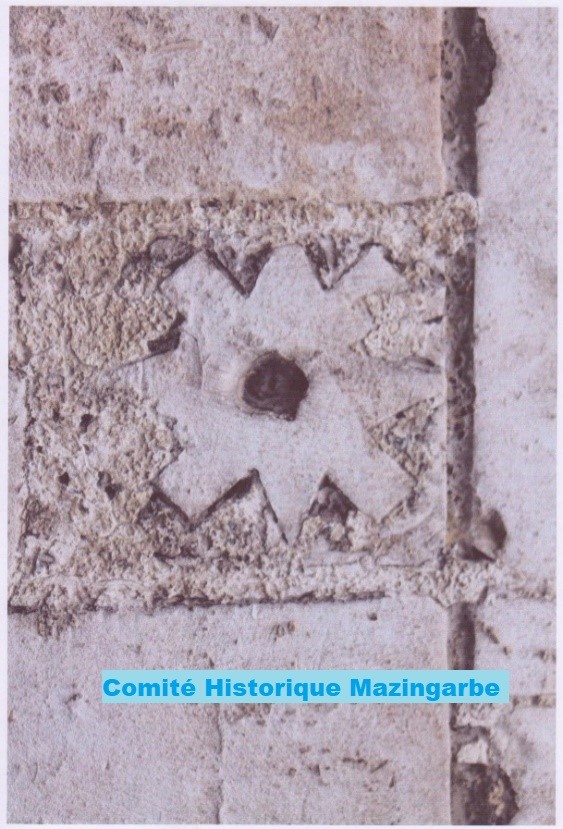
Image Courtesy of Comité Historique
Mazingarbe
The marmalade jar from Keillers of Dundee, pictured below, was
dug up in Mazingarbe in 1920. Perhaps, it had been sent in one of the many food
parcels that arrived to the front to supplement a soldier’s daily army food
rations. At the beginning of the First World War, Dundonian men typically
joined the 1/4th (City of Dundee) Battalion, The Black Watch. This local
territorial infantry unit was mostly resourced by men from the city and its
immediate surrounding areas. The battalion came to be known as Dundee’s Own.
Dundee’s Own fought its last battle as an independent unit at the Battle of
Loos on 25 September 1915. Over two hundred men from Dundee’s Own were killed
or injured and this high number meant that the battalion could not continue as
an independent unit.
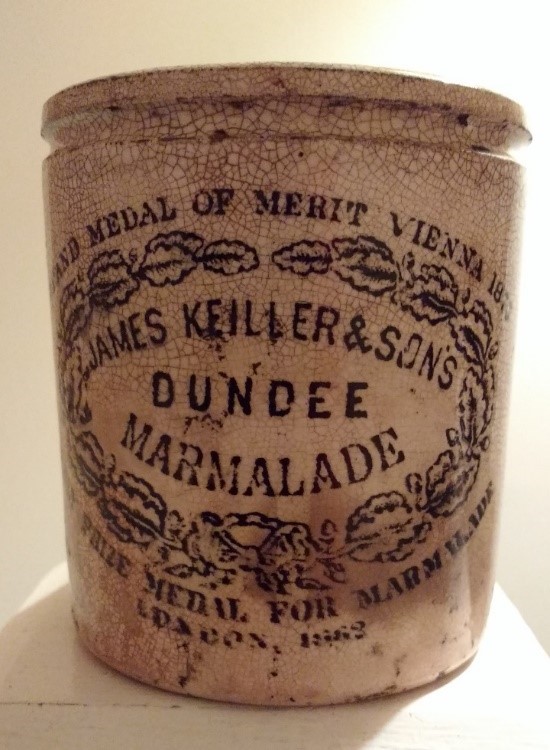
Keiller’s Marmalade Jar found in Mazingarbe
A permanent reminder is always present in the many war
graves that can be found within the boundaries of the commune of Mazingarbe.
The following document was prepared on 22 April 1920. The total number buried
and remembered there is 2,564, of which 2,458 are British.
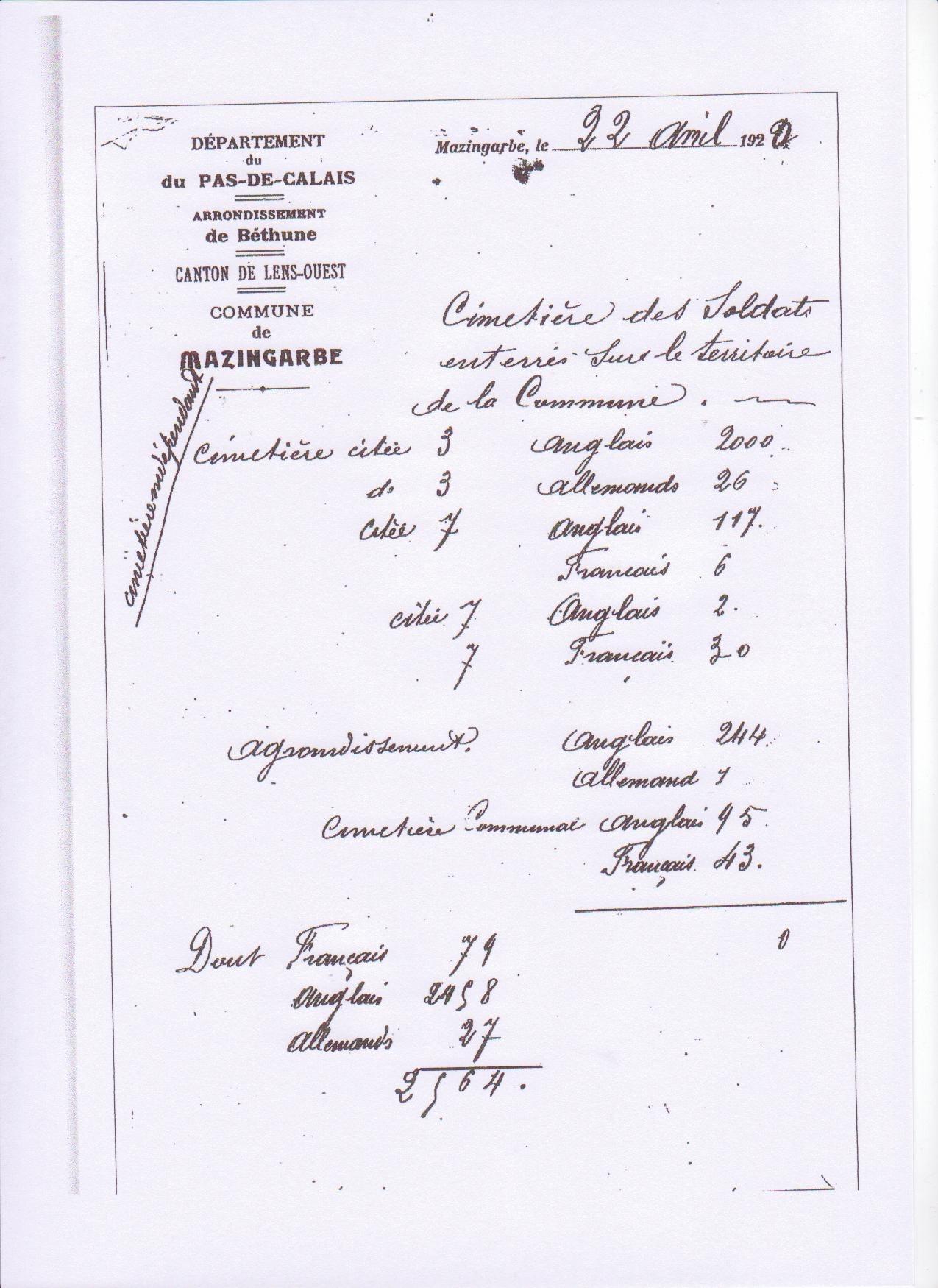
Image Courtesy of Comité Historique
Mazingarbe
Sadly, the town of Mazingarbe had the burden of the loss of
its own casualties. The World War I Monument to the Dead in Mazingarbe reveals
a large number of military deaths. A further death toll was to result from Mazingarbe’s
proximity to the front, just over a mile away – the town experienced heavy
civilian casualties, with 77 civilian names from World War I remembered on the Mazingarbe
War Memorial.
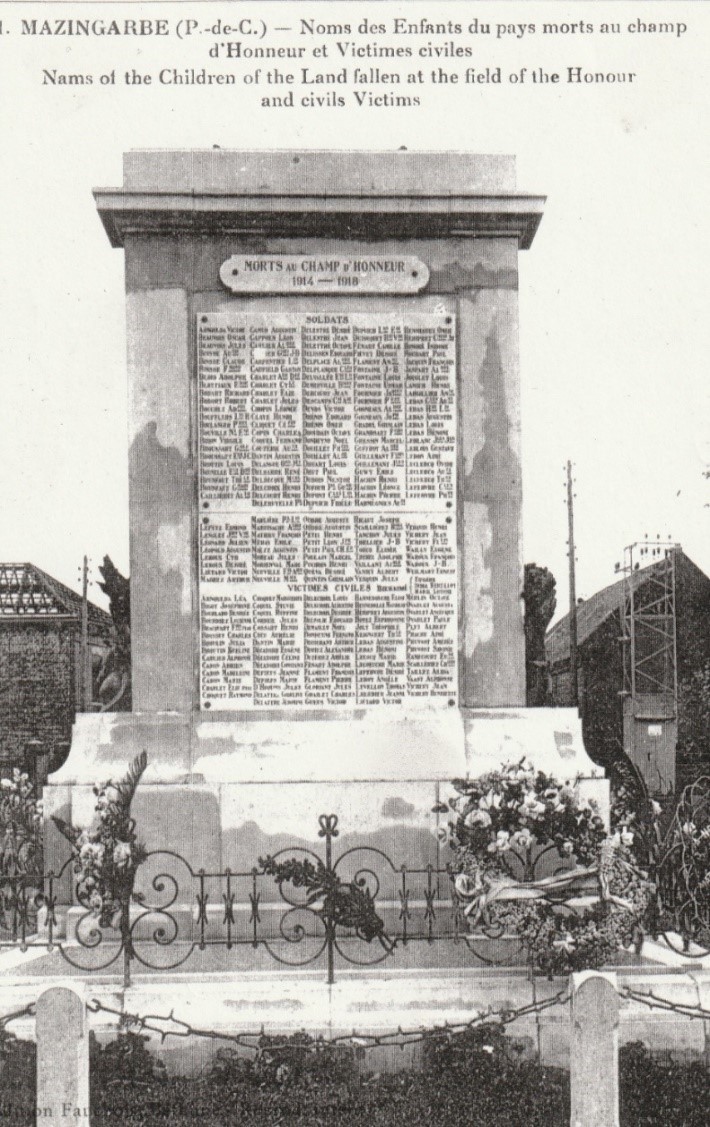
Image Courtesy of Comité Historique Mazingarbe
Mazingarbe was to play a reluctant role in another aspect of
World War 1 deaths. Today these historical deaths are referred to as ‘Shot at
Dawn’. It is always challenging to examine events of 100 years ago, especially
when considering the actions of soldiers, in the kind of war that was never
experienced again in the same manner, against enemy forces at such close
proximity. Post-traumatic stress disorder (PTSD), or ‘shell shock’, and the
impact of mental health of participants in 1916 were barely recognised or
treated. However, events happen and they should not be expunged but be debated
and learned from in our modern-day assessment of our history.
Ninety years after their deaths, 306 of the 346 soldiers who
were executed after court martial during World War I, were granted posthumous
pardons from the British Ministry of Defence. These soldiers were executed
during hostilities for breaches of military discipline that included desertion,
cowardice, quitting their posts, striking a superior officer, sleeping at their
post, and casting away their arms. The remaining group of forty soldiers was
not granted a pardon because of the nature of their crimes, which included
murder and mutiny. The 306 received no medal, are never mentioned in memorial
services and their grieving families received no pension
Of the 200,000 men who were court martialled during World
War I, 20,000 were found guilty of offences that carried the death penalty. Of
those, 3,000 actually received the sentence, of which 346 were carried out.
Four of these soldiers were only 17 years old. The pardon was for the Offence
not the Execution.
Eleven soldiers were shot against the wall of the abattoir
in Mazingarbe. This document was provided by Gérard Delporte of the Comité
Historique Mazingarbe.
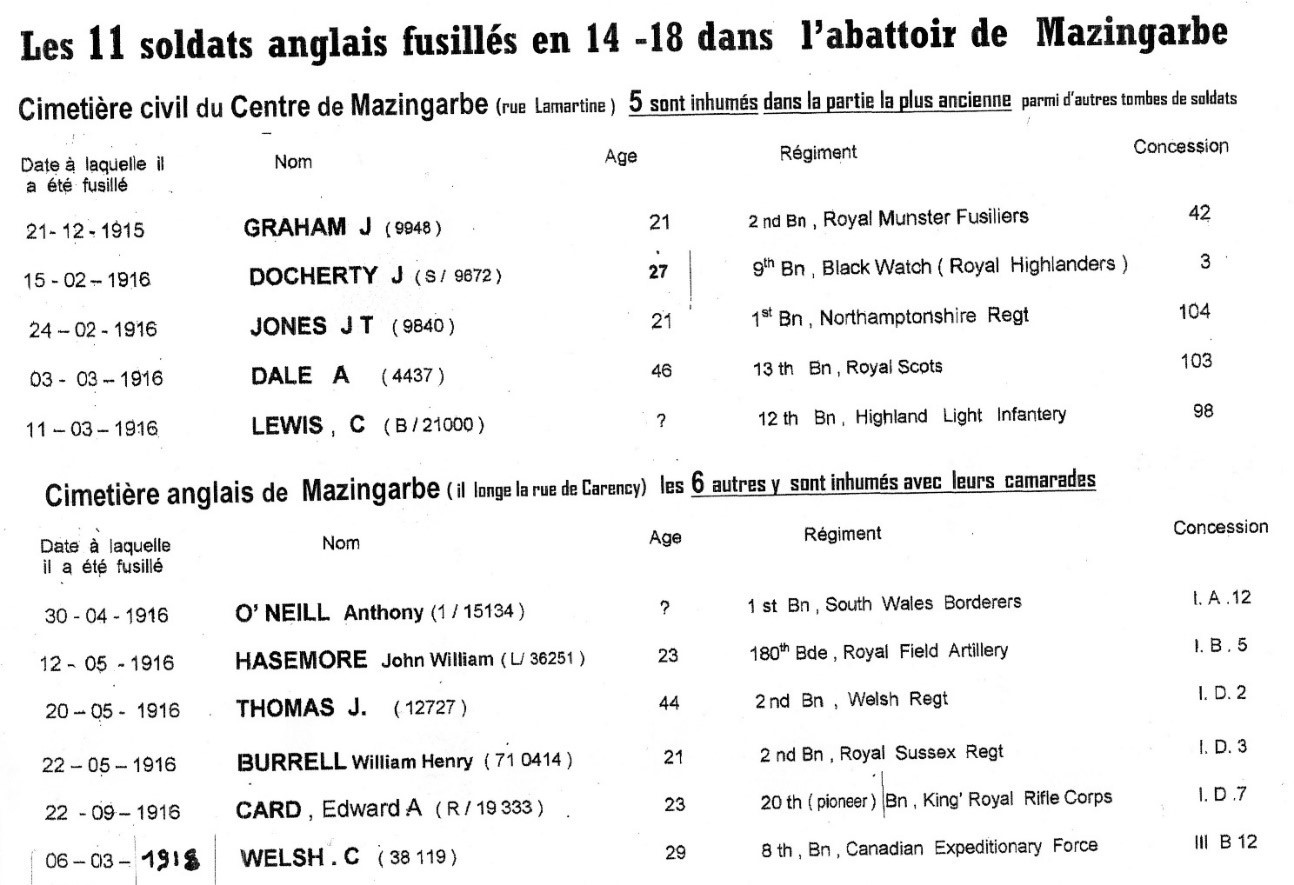
Image Courtesy of Comité Historique Mazingarbe
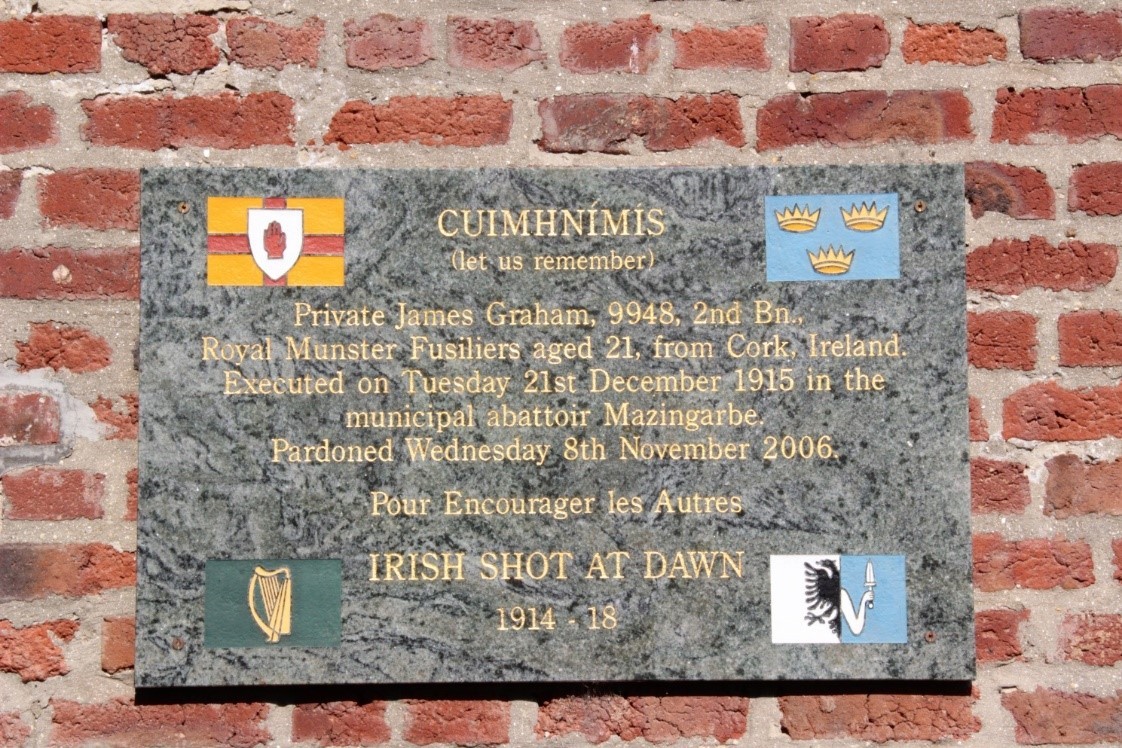
A single plaque is mounted on the outside wall of the
abattoir, and recognises the 2006 pardon of James Graham, the first soldier to
be executed at Mazingarbe in December 1915.
One of the soldiers who was executed, but not pardoned, was
a 45-year-old married man and former labourer, Arthur Dale, a Private and
former colleague of Robert Dunsire VC in the 13th Battalion of the Royal Scots.
Dale had been found guilty of the murder of Lance Corporal
James Sneddon. In the report of Royal Scots’ casualties, in The Musselburgh
News of Friday, 10 March 1916, Lance Corporal Sneddon’s death is carefully
categorised as ‘died’. It was reported in an identical manner in The Scotsman
of 1 March 1916. I can find no newspaper report of the time that explained the
circumstances of his death, but the following reveals the charge against Arthur
Dale.
On 8 February 1916, while out on rest, Arthur Dale spent the
day drinking in a local bar. His friend, Lance Corporal James Sneddon, came in
and told him that he had drunk more than enough and should go back to his
billet, which Dale did. Witnesses state that they saw Dale climb into his loft
with his rifle and, a moment later, a shot rang out. Sneddon fell, mortally
wounded. The witnesses and arresting police all stated that Dale was very drunk
and incoherent. He was brought to trial on 20 February and condemned to death
for murder.
The field general’s Court Martial Statement on behalf of the
accused, given by Kinghorn born Captain Charles W. Yule, 13th Royal Scots,
‘Prisoner’s Friend’, states: ‘The evidence shows no premeditation or malice
aforethought’. The deceased lance corporal himself said, ‘It was an accident’.
Captain Yule produced Army Form B 122 – Dale’s Conduct Sheet – which had no
entries apart from character ‘good’ and his declared age. The accused made no
statement in mitigation. The warrant was signed by Major General F.W.N.
McCracken, Commander of the 15 Division. Private Arthur Dale was executed at
06.35 on 3 March 1916, at Mazingarbe abattoir.
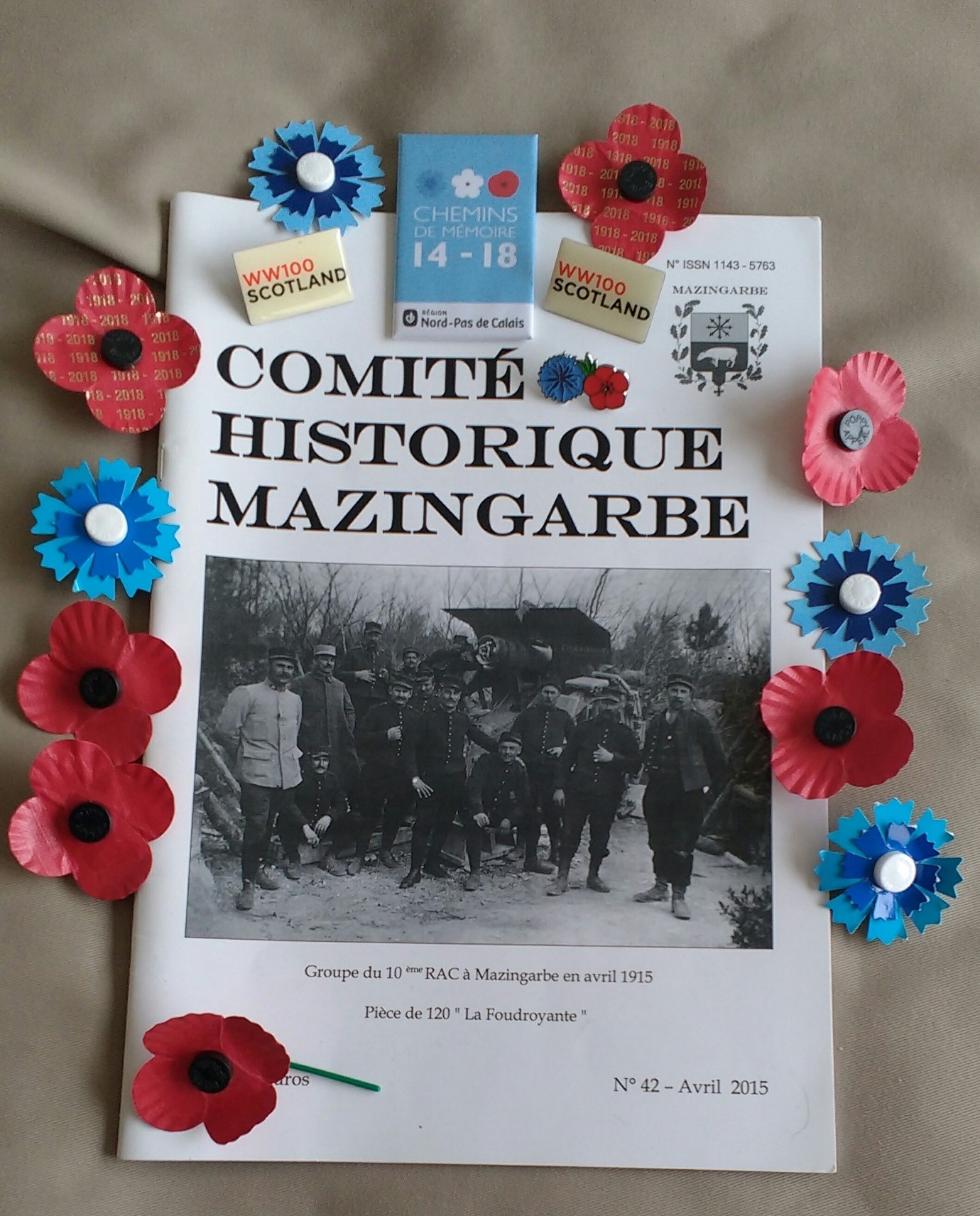
This publication in April 2015, by the Comité Historique
Mazingarbe, documents the events and personal stories of what was happening to
the Mazingarbois and to Mazingarbe throughout 1915. It also contains a short
article about Robert Dunsire VC in the context of the Battle of Loos. In Issue
39, that appeared in June 2012, there was a very well-researched and excellent
article about Robert Dunsire VC.
Comité Historique Mazingarbe deserve a very special mention
for their work over very many years in documenting and exhibiting the history
and stories about Mazingarbe. Throughout my working partnership, over the past eight years on my own journey of discovery with Robert Dunsire VC, my observation would be that, until 2015, Robert’s
story was better known in France than at home.
Finally, it
is to the people of Mazingarbe who turned to and looked upon our brave troops
as the key to their freedom and survival. They played their own part and this
was subsequently recognised in 1920.
The brave
patriotic demeanour and attitude of the population of Mazingarbe throughout
World War I was recognised by its receipt of the Croix de Guerre in 1920, whose
citation states the following:
Bombardée par canons et par avions, a fait preuve d'une
superbe vaillance et d'une patriotique fermeté malgré le nombre élevé de
victimes dans sa population et des dommages qu'elle a subis.
[Bombarded by guns and planes, Mazingarbe Commune showed
glorious bravery and patriotic determination despite suffering large number of
casualties among the population and much damage to property.]
In the unfortunate circumstances of death in France during
World War I Robert Anderson Dunsire VC could have a ‘no more caring’ final
resting place than Mazingarbe.