oxygen domain was triggered too early. This is usually an indicator for some code in the plugin or theme running too early. Translations should be loaded at the init action or later. Please see Debugging in WordPress for more information. (This message was added in version 6.7.0.) in /home/rdunsire/public_html/wp-includes/functions.php on line 6260wordpress-seo domain was triggered too early. This is usually an indicator for some code in the plugin or theme running too early. Translations should be loaded at the init action or later. Please see Debugging in WordPress for more information. (This message was added in version 6.7.0.) in /home/rdunsire/public_html/wp-includes/functions.php on line 6260This moving image of a Memorial Card from Robert’s father,
that I first saw at the excellent Methil Heritage Centre, was to prove a
powerful trigger in my desire to find out about the story of Robert Anderson
Dunsire VC. I had been born and raised in Methil but had never heard the name
or his story. I had an interest in History. I was shocked that a local VC
seemed a forgotten man.
What became much more remarkable was when I discovered,
while researching Robert’s family tree at the National Records of Scotland at
Register House in Edinburgh and having a dip into my mother’s family tree, that
my maternal grandfather had been in the same Company, Battalion and Regiment as
Robert Dunsire. It was an entry in my aunt’s Birth Certificate from January
1915 that showed that my grandfather had enlisted. In fact, his Serial Number
differed by only 5 from that of his namesake, Robert. Were they in the same
enlistment queue? Too late for me to
find out and my grandfather’s Service Record had been destroyed with many more
during the Blitz in World War 2.
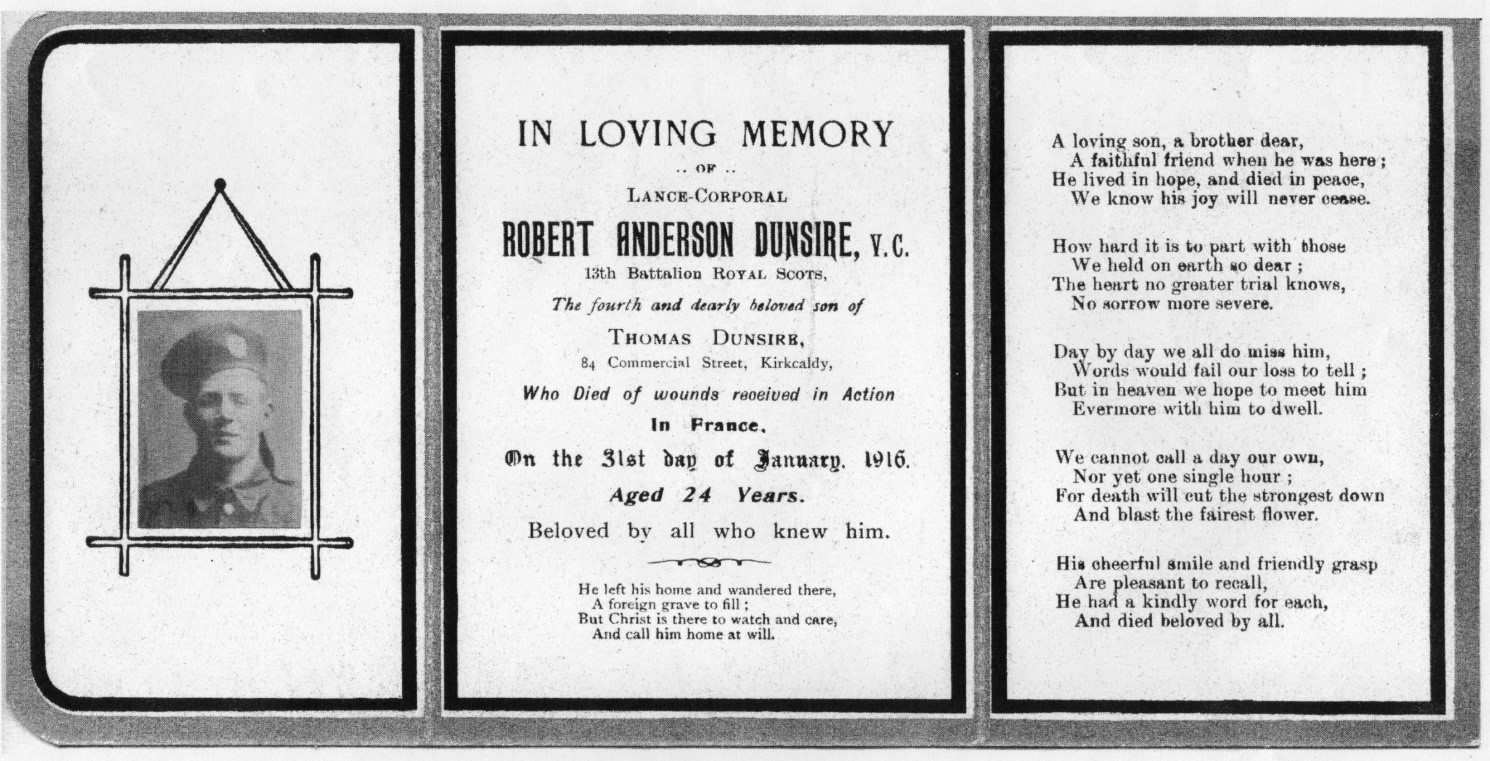
Image from copy held in Methil Heritage Centre
With thanks to The Friends of Methil Heritage Centre
My discoveries and acts of Remembrance took me on a personal
journey though I was fortunate that my grandfather, whose name I carry,
survived the War.
Remembrance can be achieved in many shapes and forms at home
and abroad. Robert is remembered on war memorials of Buckhaven and Methil,
Kirkcaldy and Buckhaven Higher Grade School, which also includes Ralph Pitt.
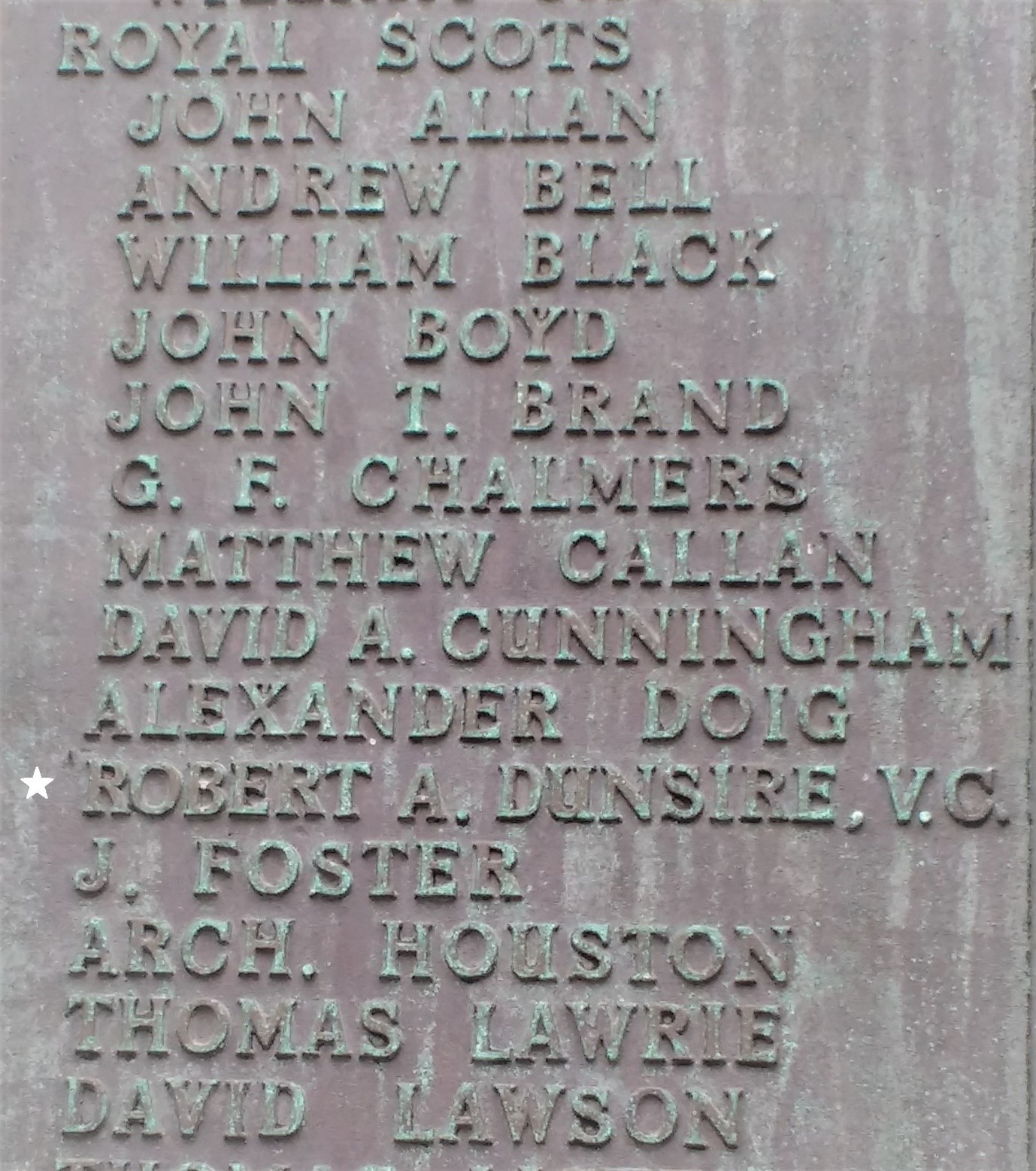
Buckhaven and Methil War Memorial unveiled on 22 November
1922
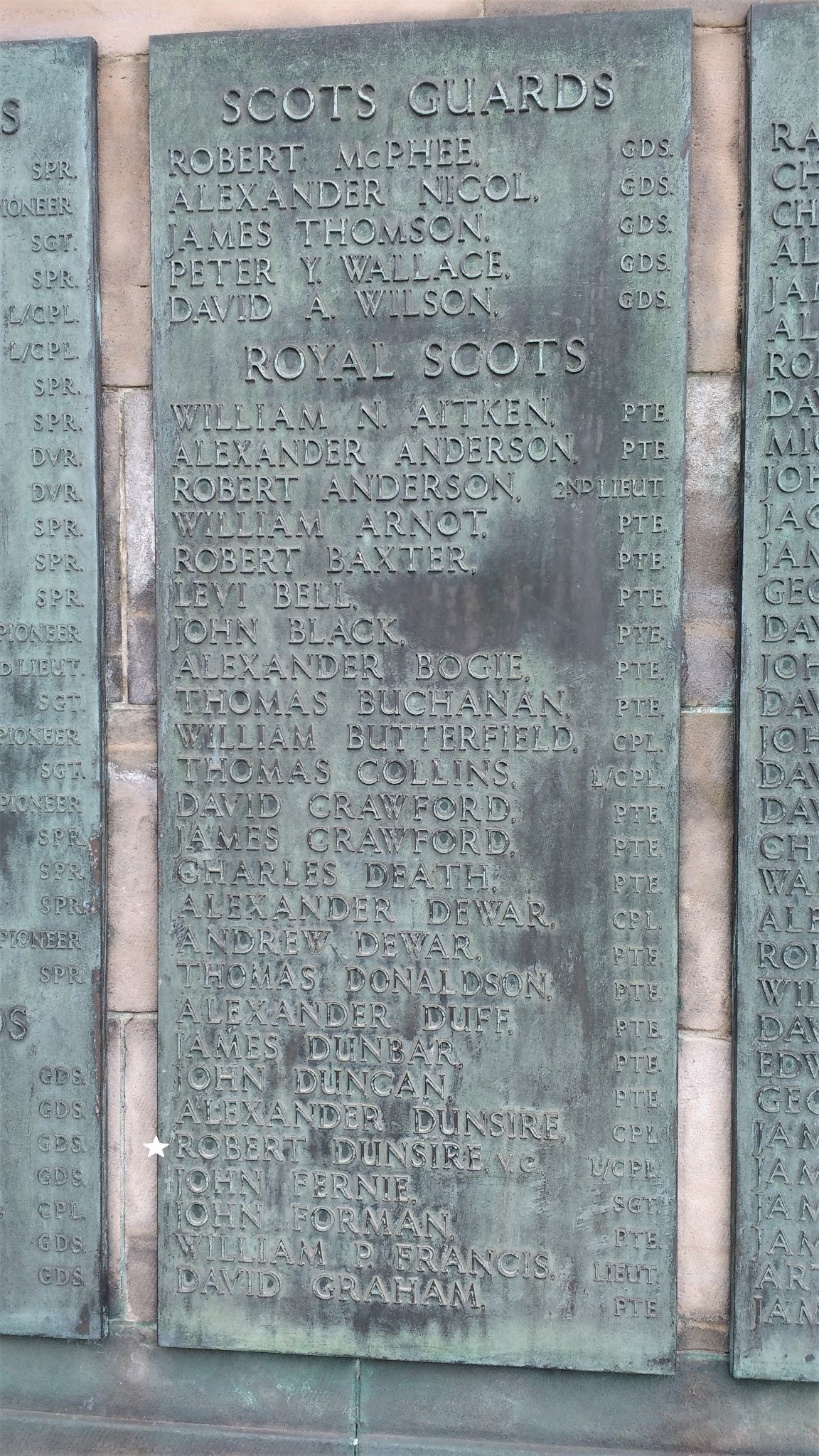
Kirkcaldy War Memorial unveiled on 27 June 1925
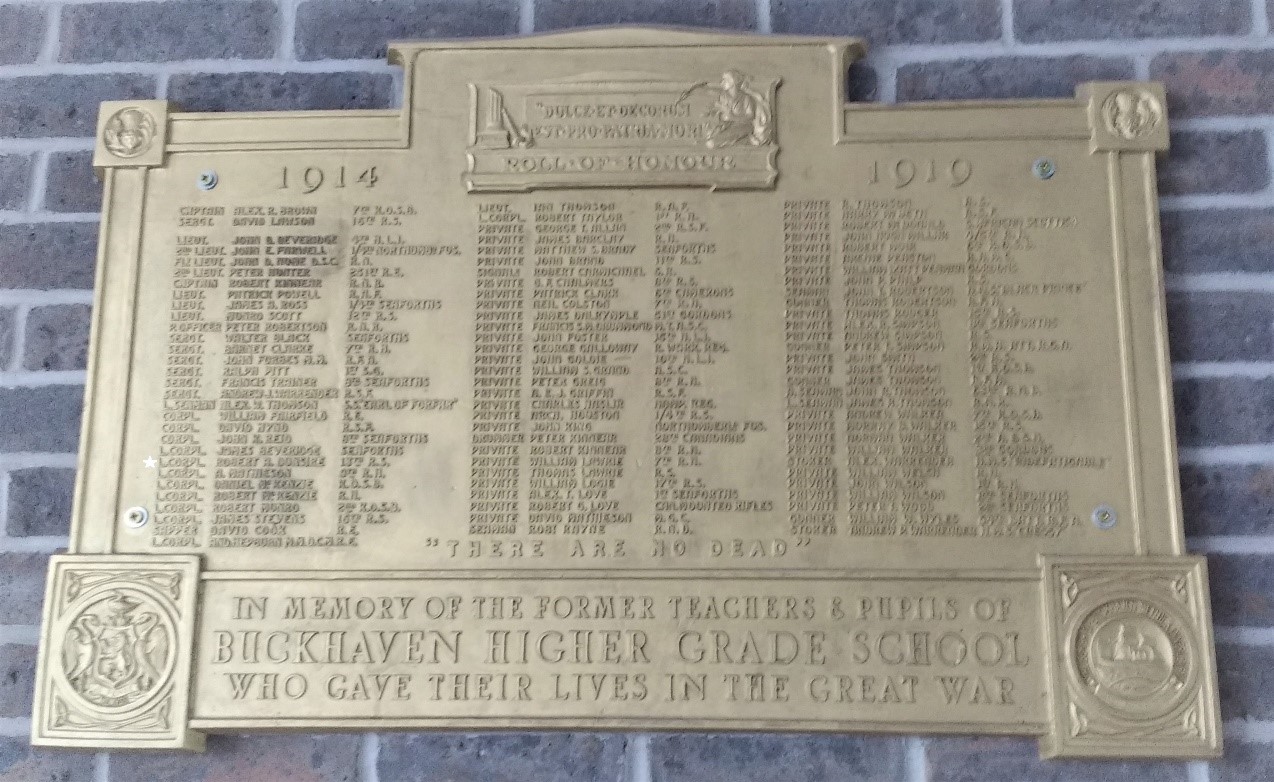
Buckhaven Higher Grade School Memorial now in Levenmouth
Academy
Unveiled on 10 December 1920
Home area churches also created their own Congregational
Memorial tablets.
Pathhead Evangelical Union (EU) Congregational Church had a
Memorial tablet made by sculptor, Mr Murdoch. It had 16 names inscribed on it,
including Lance-Cpl Robert A Dunsire VC. The Memorial was unveiled on 4 July
1920 by Mrs Bowman, eldest member of the congregation. The Pathhead Church was
to unite with Kirkcaldy West End Congregational Church on 24 September 2017 in
one building on Kirkcaldy High Street.
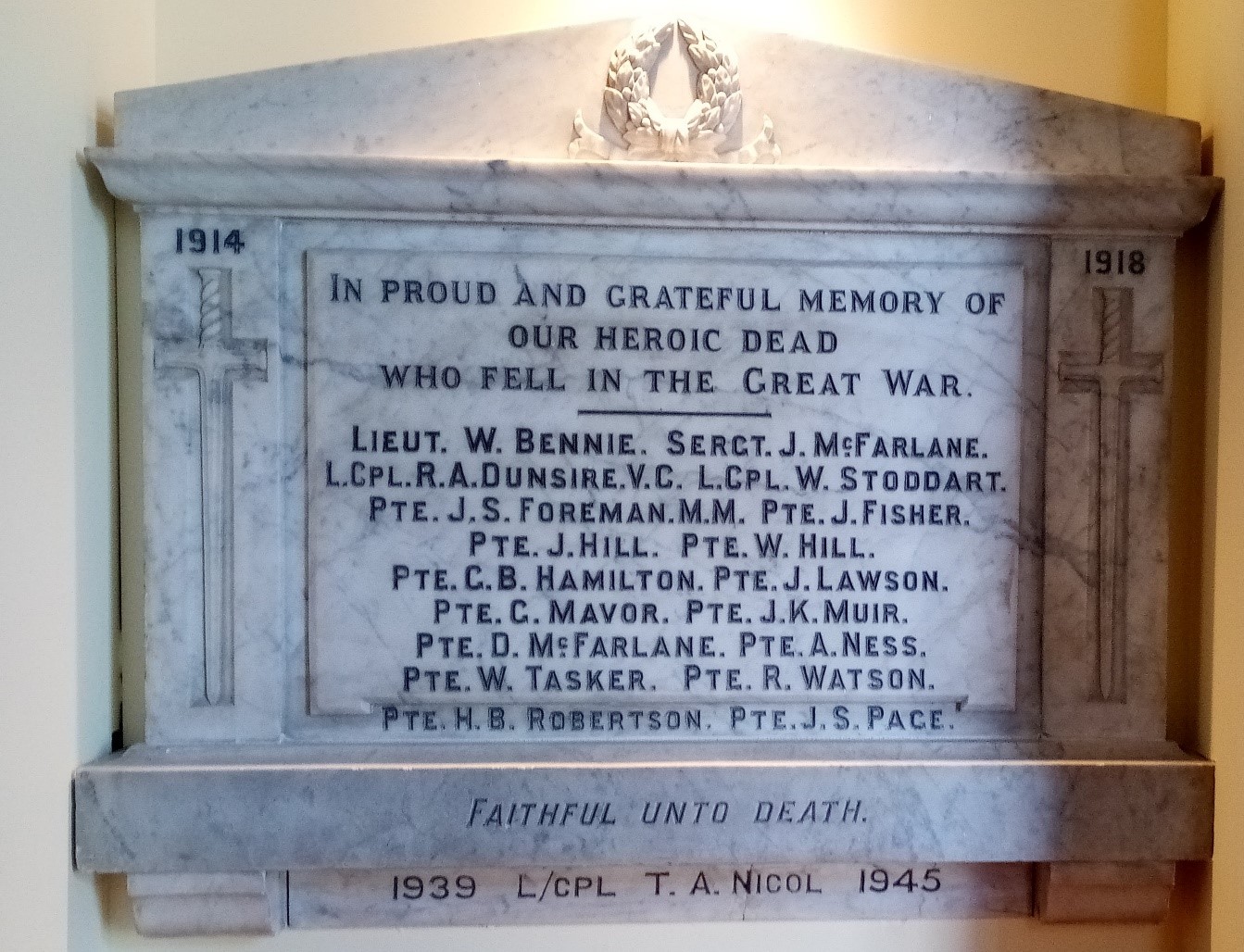
Image Courtesy of Revd Kevin Flett, Minister, Kirkcaldy
Congregational Church
The newly opened Methil Parish Church dedicated their
Congregational War Memorial on 31 January 1926. The dedication ceremony was
performed by the Very Reverend Dr George Milligan, Professor of Divinity at
Glasgow. The Memorial takes the form of six glass-stained windows situated in
the transepts of the church. Slightly later a bronze tablet that displayed the
Roll of Honour was unveiled. Robert’s name is inscribed on the bronze tablet as
Lance.Cpl. Rbt. A Dunsire VC RS. Methil
Parish Church remained on its original site when it united with Innerleven East
Church to form Wellesley Parish Church of Scotland with a service of Union on
28 June 2012.
In the case of Robert there is a further permanent reminder
in the town of Kirkcaldy where he was made a Freeman. He had a street named
after him, though the journey took a bit longer than originally planned. A
proposal to name a street after Robert in Kirkcaldy, in May 1935, did not
succeed. Instead, the decision was made to name the street after a local
councillor, who was seen as more worthy of recognition because of his work in
Ward Three.
However, the situation was to change when, in October 1935,
the proposal by Councillor Dall was agreed and the name of Dunsire Street appeared
in Kirkcaldy.

An extension to the street in Overton in July 1945 ensured
that Robert would be remembered for many decades to come with more tenants
coming into the street. He would have appreciated this use of his name.
The naming of Dunsire Street in Methilhill is less clear. I
can find no backup evidence for any naming of the street. Dunsire Street first
appears in newspaper reports in April 1925. The houses were built by Wemyss
Coal Company in an area that was under the stewardship of Fife Council, but
which was not part of the Burgh of Buckhaven, Methil and Innerleven at that
time.
Robert Anderson Dunsire VC’s final resting place is at
Mazingarbe communal cemetery in Pas-de-Calais, France, where areas are set
aside for British and French soldiers in the local public cemetery.
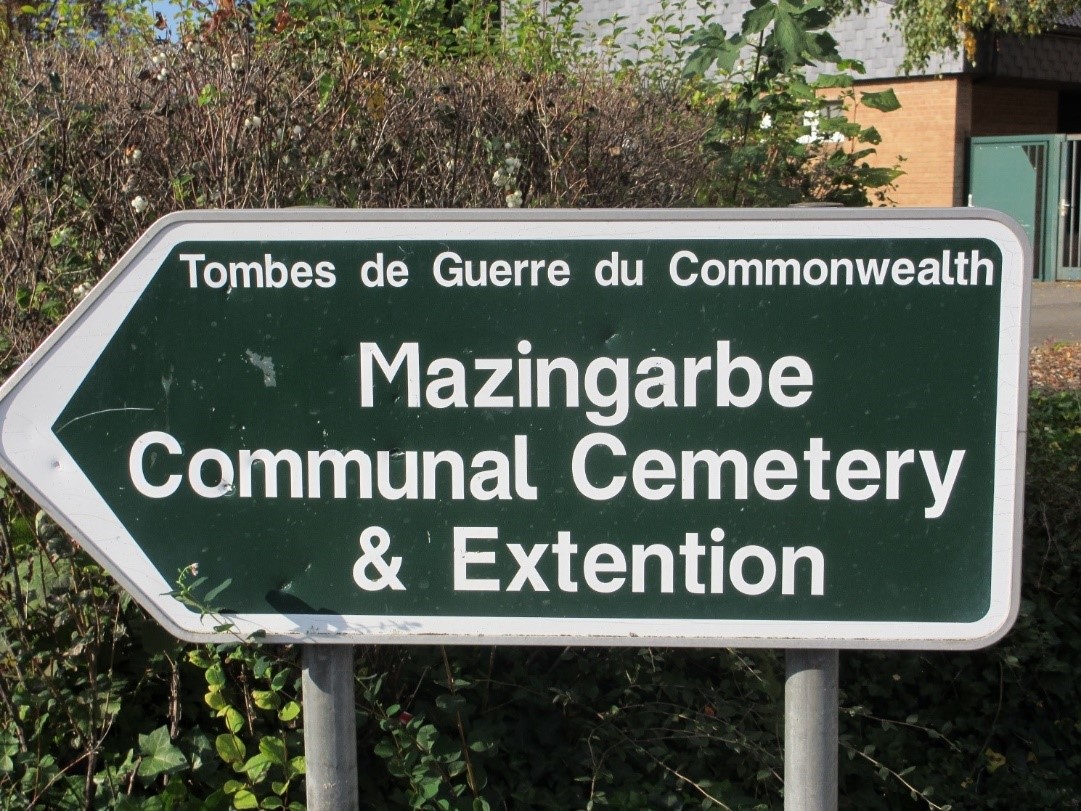
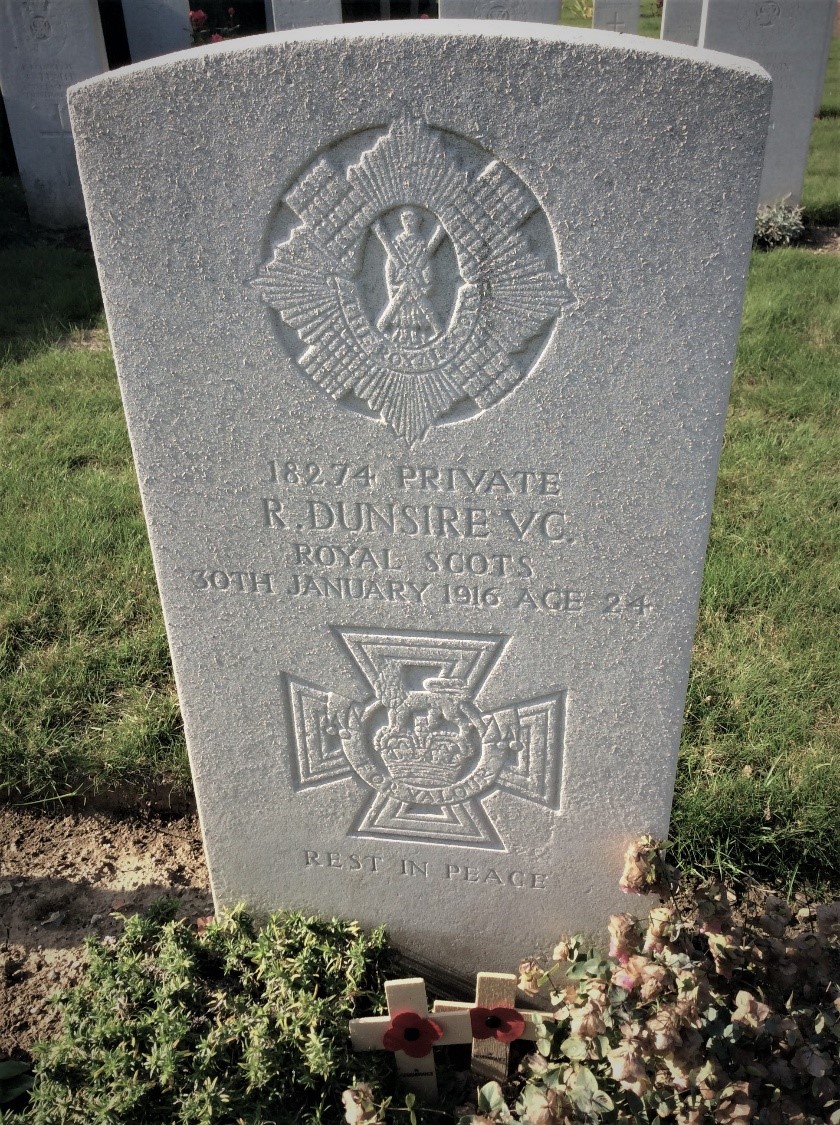
Robert Dunsire VC Grave in Mazingarbe Communal Cemetery
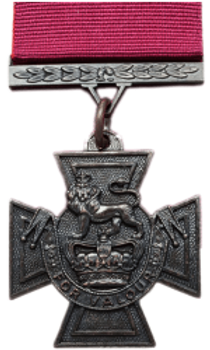
Robert’s Medals, including his Victoria Cross, are on
permanent display at The Royal Scots Museum. This Museum is now part of The
Royal Regiment of Scotland Museum at Edinburgh Castle and worthy of a visit.
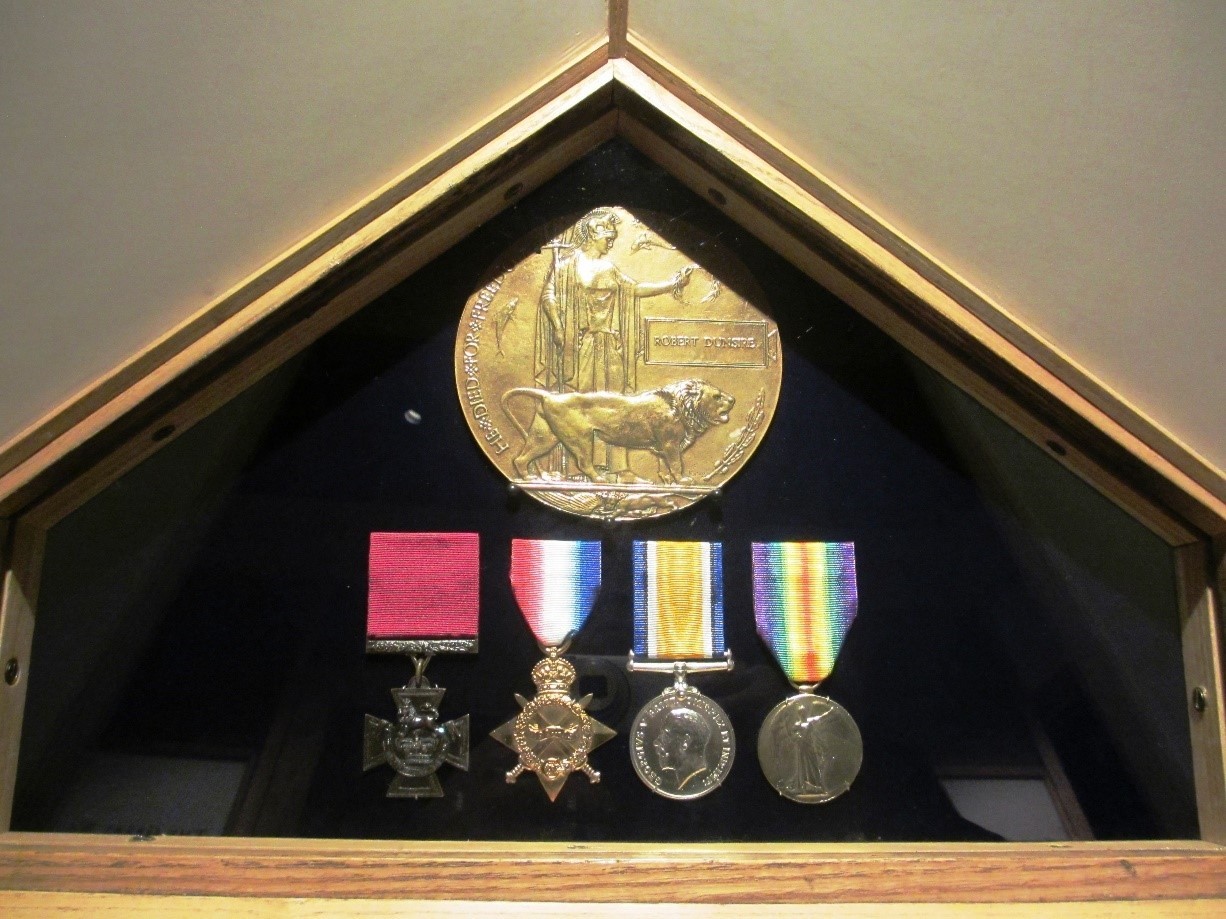
The top of the display shows Robert’s Death Penny.
Robert’s medals left to right are:
Victoria Cross • 1914-1915 Star • British War Medal 1914-1918 • Allied Victory Medal
The World War One Memorial Plaque was made from Bronze and
became widely known as, the “Death Penny”, “Death Plaque” or “Widow's Penny”. The
original plaque was a 12 cms disk cast in bronze gunmetal, which included an
image of Britannia and a lion, two dolphins that represented Great Britain's
sea power and the emblem of Imperial Germany's eagle being torn to pieces by
another lion. Britannia is holding an oak spray with leaves and acorns. Beneath
this was a rectangular tablet where the deceased name was cast into the plaque.
No rank was given as it was intended to show equality in their sacrifice. On
the outer edge of the disk, it bears the inscription, 'He died for freedom
and honour'.
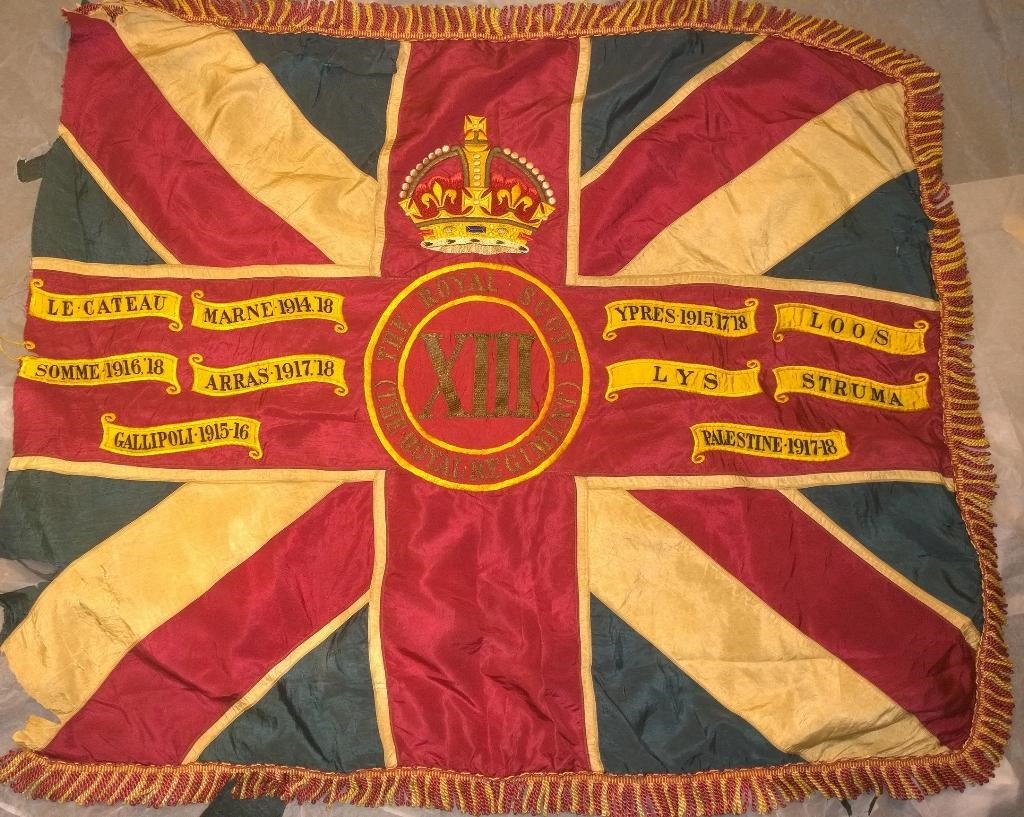
As well as individual remembrance the Battalion Colours of the
13th Battalion, The Royal Scots Battle Honours are a form of remembrance for
the Battalion and their contribution throughout World War 1. The Battle of Loos
is only one of 10 significant battle engagements that are remembered on the
Colours. The Colours are also held in the Museum who provided this photograph.