oxygen domain was triggered too early. This is usually an indicator for some code in the plugin or theme running too early. Translations should be loaded at the init action or later. Please see Debugging in WordPress for more information. (This message was added in version 6.7.0.) in /home/rdunsire/public_html/wp-includes/functions.php on line 6260wordpress-seo domain was triggered too early. This is usually an indicator for some code in the plugin or theme running too early. Translations should be loaded at the init action or later. Please see Debugging in WordPress for more information. (This message was added in version 6.7.0.) in /home/rdunsire/public_html/wp-includes/functions.php on line 6260Wemyss Parish, particularly the new burgh of Buckhaven,
Methil and Innerleven, had taken major steps forward in the years after Robert
and his family left for Overton Road and the Pathhead and Sinclairtown areas.
During this period of expansion, the Dunsire family name was
part of the fabric of Buckhaven, Methil and Innerleven, through the various
public and church roles and positive contributions of his uncles, Robert and
Peter, had made to their growing community. Robert was surrounded by very
positive influences. Their contributions and activity were well documented in
the local Buckhaven and Kirkcaldy press, so Dunsire was a known family name in
those areas.
His Uncle Robert was also a well-known choirmaster in
Buckhaven. When he left Buckhaven in late October 1913, to settle in Manitoba,
Canada, the local newspapers noted that he had been the choirmaster at St
David’s church for nearly twenty-five years. Prior to that, he had been the
choirmaster at Muiredge church for eight years. His son, Peter, remained behind
in Buckhaven. He took up his father’s baton at St David’s Church and only
retired from his role as their choirmaster in May 1934, after working with both
junior and adult choirs. His retiral brought an end to the family dynasty at St
David’s Church choir after a grand total of forty-five years.
The musical Buckhaven Dunsires were a force for good for a
receptive and young Robert Dunsire. So, when he eventually moved along the
coast, Robert became leader of the Buckhaven PSA Orchestra. Robert’s life
influences had breadth and depth.
When Robert moved to work at the Rosie Pit at East Wemyss
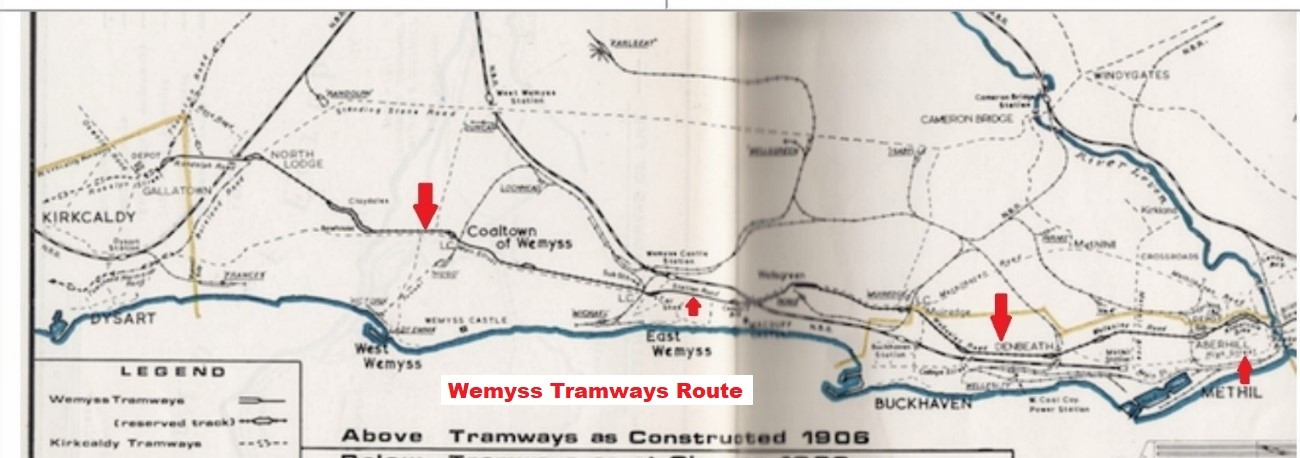
the journey from Kirkcaldy had been simplified by the opening, in 1906, of
Wemyss Tramways, which ran between Gallatown and Scoonie in Leven. It connected
with the Kirkcaldy Corporation trams at Gallatown giving 45 minutes’ access
time to the mainline station in Kirkcaldy from Leven. In its first fortnight,
the Wemyss Tramways carried 58,000 passengers.
Apart from the new housing created by the Wemyss Coal
Company in Denbeath, the White Swan Hotel was built (pictured below in
development, fronted by a Wemyss Car). The Savoy Skating Rink was built behind
the Gaiety Theatre opposite the hotel at the top of Swan Brae. Wemyss Brick
Works sat alongside the Wemyss Private Railway line that ran towards Wemyss
from the Wellesley Colliery.
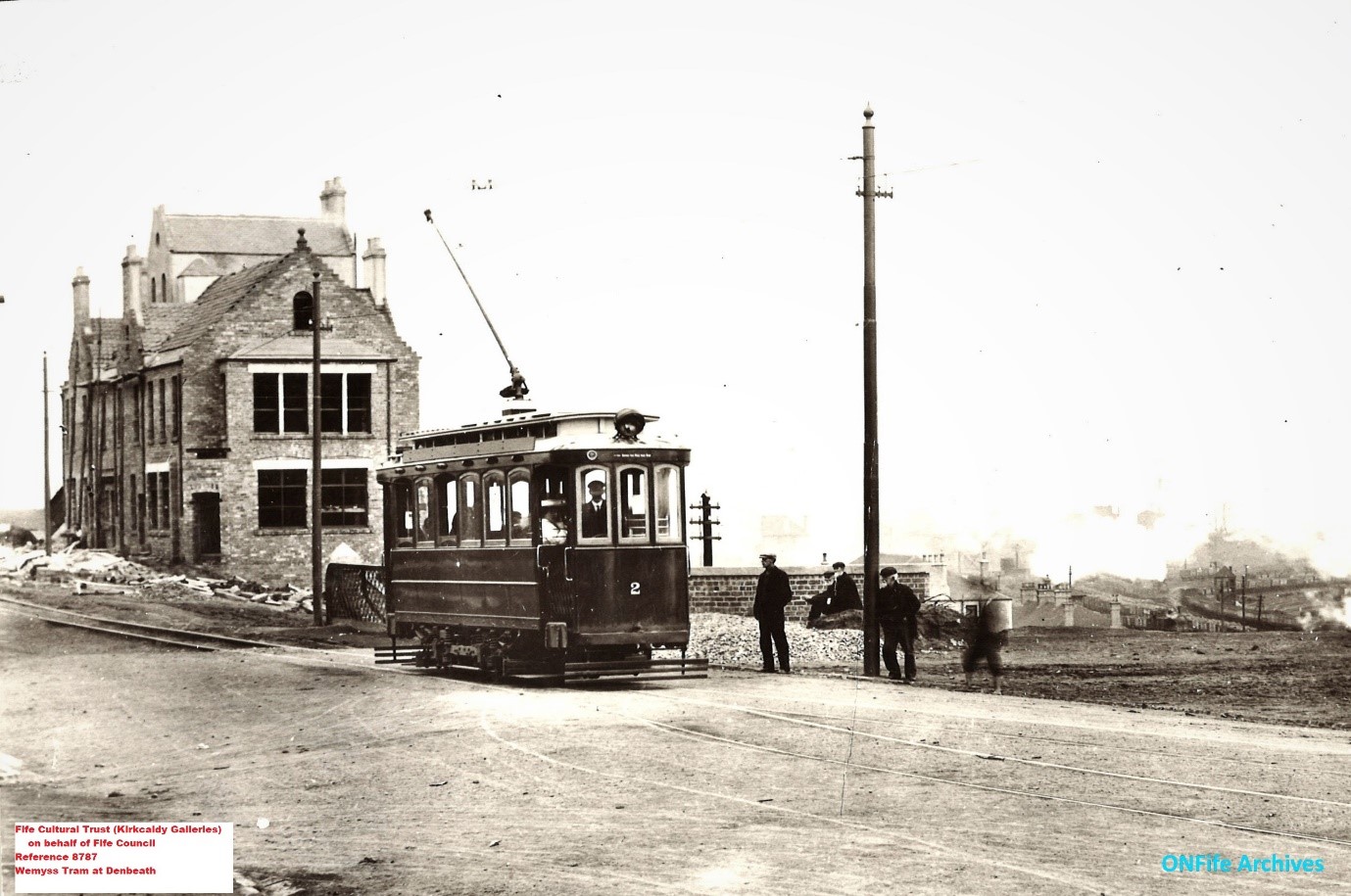
Attr: Fife Cultural Trust (Kirkcaldy Galleries) on behalf of
Fife Council
Denbeath, now known as Wellesley Colliery, was now run by
the Wemyss Coal Company rather than a lessee and had an additional shaft and a
power station that also supplied Wemyss Tramways. The new Randolph Wemyss
Memorial Hospital for the miners and the community opened and had a link
directly under Wellesley Road from the pit. The hospital still provides NHS
Community Services 100 years later. Finally, there was a new school at
Denbeath. It was an imaginative and productive transformation in a twenty-year
period since Robert’s birth in 1891.
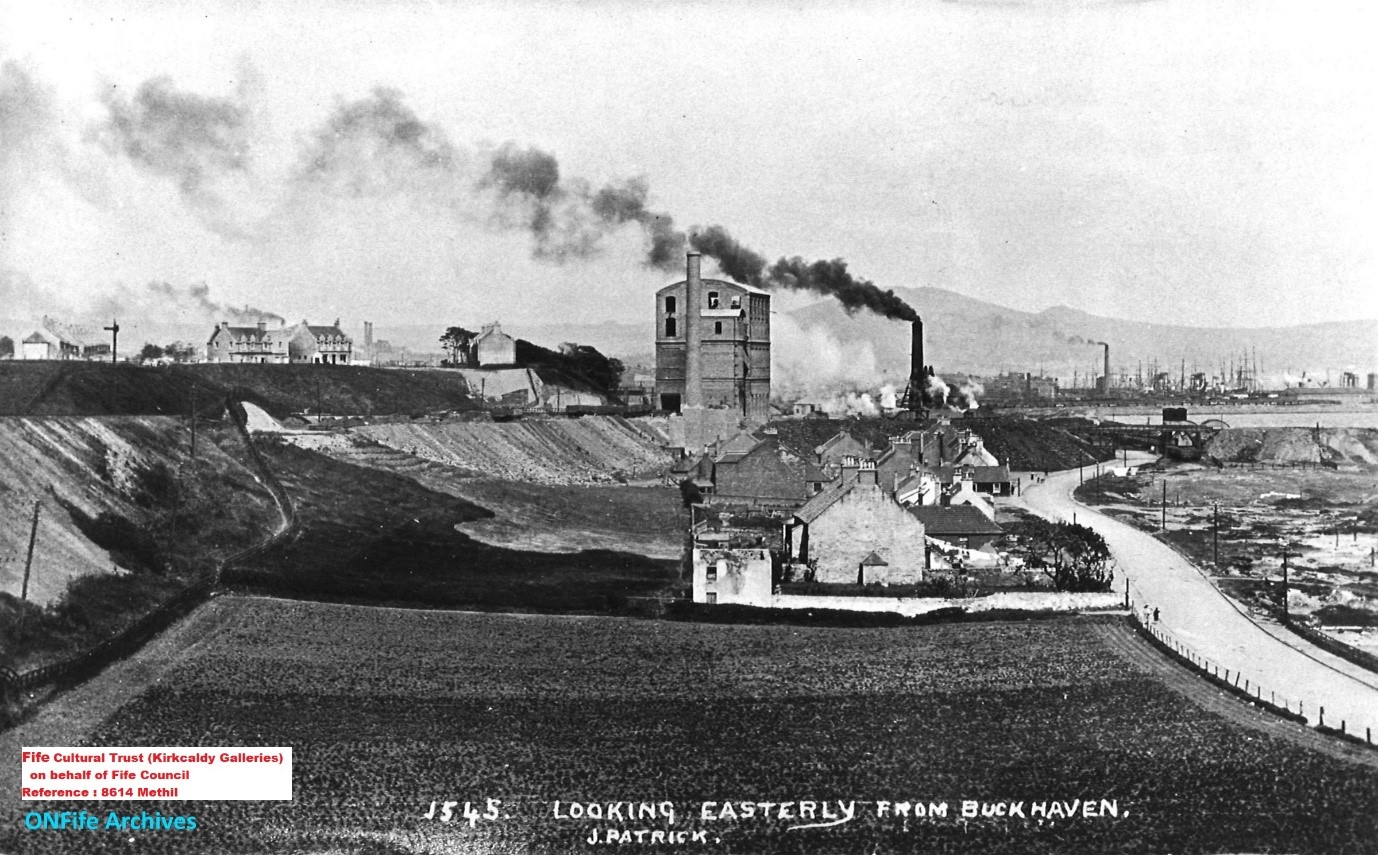
Attr: Fife Cultural Trust (Kirkcaldy Galleries) on behalf of
Fife Council
In parallel with the building of housing and community
facilities and the opening of Wemyss Tramways, the Wemyss Private Railways
expanded to provide a rail system opened in May 1887 and integrated the local
pits with Methil docks, as well as with the mainline North British Railways
(NBR) infrastructure. NBR bought the docks from Wemyss Coal Company in 1889.
The above photo shows the area towards Denbeath, Denbeath Colliery and Methil
Docks that was purchased and to be further developed by Randolph Wemyss
All of the above infrastructure came together to form an
integrated transport system for the movement of goods, coal and people,
including pit employees, who had specific trams set aside to ensure transport
availability from a wider commuting area.
Randolph Wemyss had inherited his father’s estate in March
1864 but only completely took over at the age of 21 in July 1879. Randolph
Wemyss was a canny operator and conscious of his own social responsibilities as
the Estate developed mining operations and the railway system as he providing
ample housing for employees following the development of Methil No. 1 Dock, and
implemented plans for the Wemyss Tramways.
The Assets of Messrs Bowman & Co. came back under the
control of the Wemyss Coal Company on 1 August 1905, when their leases expired.
These included the Muiredge and Rosie Collieries, whose employees were retained
by Wemyss.
Was it all of these changes that attracted 21-year-old Robert
Anderson Dunsire to move back to the area of his birth for work? Or was it the
attraction of a young worker, Kate Pitt (pictured below), who lived with her
parents in Denbeath and was employed by one of the net manufacturers in
Buckhaven?
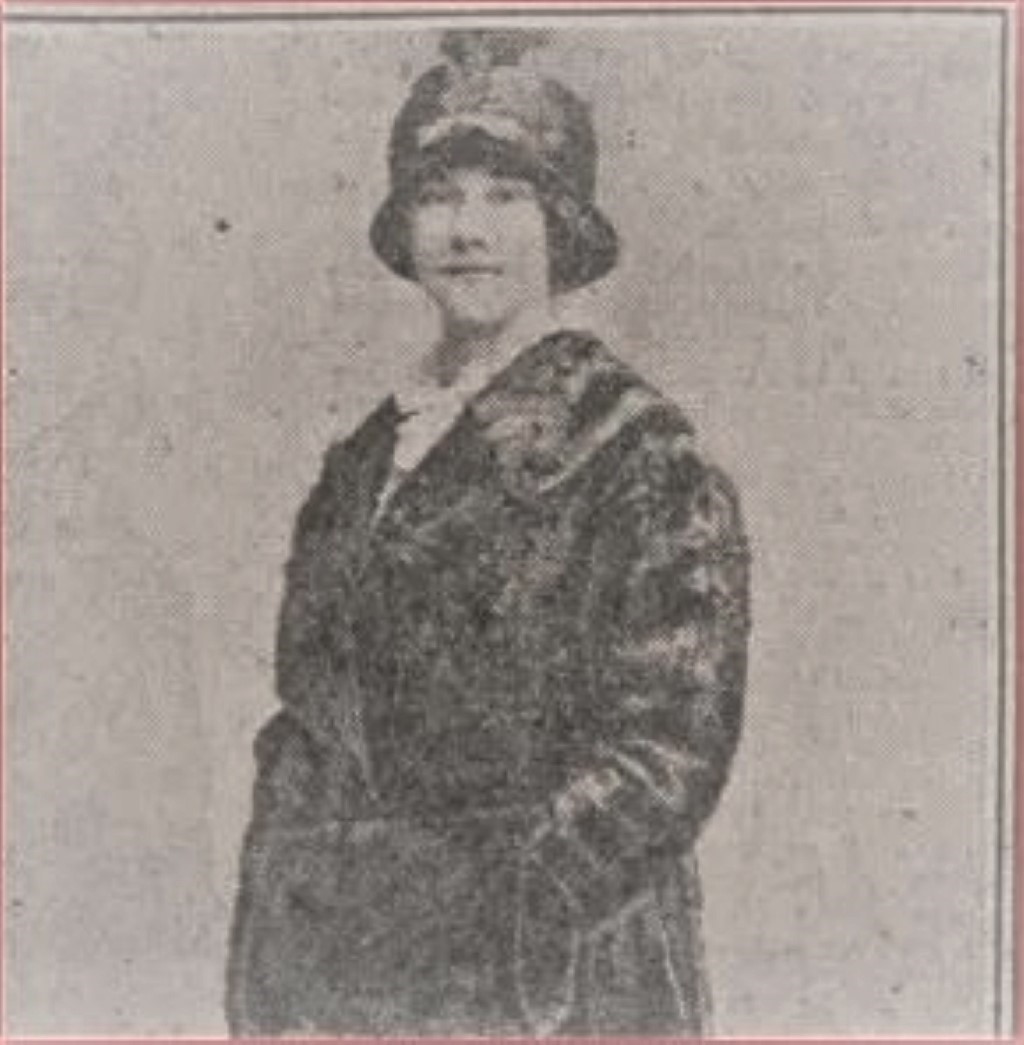
Attr: Image of Kate Pitt - Mirrorpix/Reach Licensing © Reach
PLC.
Image created courtesy of THE BRITISH LIBRARY BOARD.
Before King Coal gained its more recent momentum in the
area, Buckhaven had relied primarily on the fishing industry, which had
encouraged the development of factories making fishing nets. The earliest local
Net Manufacturer was John Ireland & Sons, who opened up in 1858, but gave
up manufacturing in 1870. J&W Stuart of Musselburgh took over the
net-manufacturing plant in 1870, and opened new upgraded works in 1878, on the
opposite side of Randolph Street, with 70 looms and approximately 70 employees.
Mr Matthew managed both plants for thirty-eight years until his retirement in
April 1908, when he retired back to Musselburgh. By 1910, there were only 20
fishing boats operating out of Buckhaven – 70 years earlier there had been 144.
The photograph shows 3 female lady employees of J&W
Stuart carrying out their quality control process by examining the newly
manufactured nets before their shipment to the local fishermen.
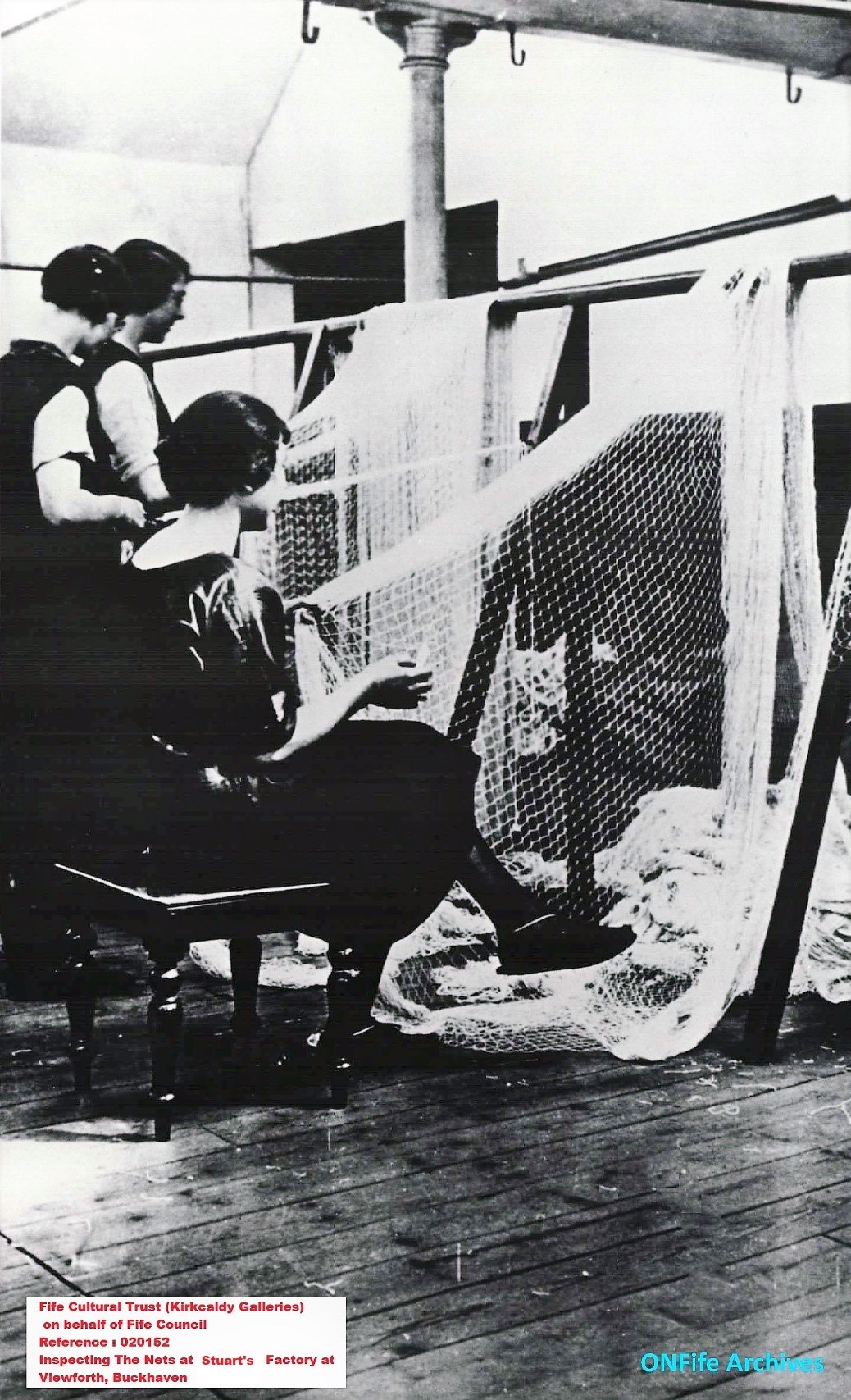
Attr: Fife Cultural Trust (Kirkcaldy Galleries) on behalf of
Fife Council
A member of a local fishing family, William Thomson, also
opened up a net-manufacturing plant in Randolph Street in 1870. The facility
continued to grow and upgrade and, when Mr Thomson died, his son continued the
production lines, continuing even after a major fire in May 1910, when they
were left with only ten of their fifty machines.
Production continued and an announcement in The Fife Free
Press and Kirkcaldy Guardian, on 25 December 1915, reported that fishing,
within a half mile of the coast of Buckhaven, could resume. A good supply of
fish was anticipated over the winter herring season. In response, William
Thomson Jr re-opened and took on unemployed girls at his net factory to meet
orders for herring nets from south of the border.