oxygen domain was triggered too early. This is usually an indicator for some code in the plugin or theme running too early. Translations should be loaded at the init action or later. Please see Debugging in WordPress for more information. (This message was added in version 6.7.0.) in /home/rdunsire/public_html/wp-includes/functions.php on line 6260wordpress-seo domain was triggered too early. This is usually an indicator for some code in the plugin or theme running too early. Translations should be loaded at the init action or later. Please see Debugging in WordPress for more information. (This message was added in version 6.7.0.) in /home/rdunsire/public_html/wp-includes/functions.php on line 6260The Warrant Instituting the Victoria Cross in 1856
Public Record Office WO 98 / 1
Firstly: It is ordained that the distinction shall be styled
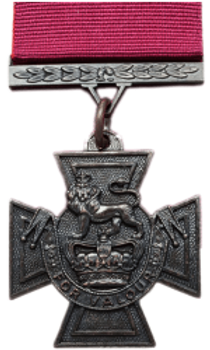
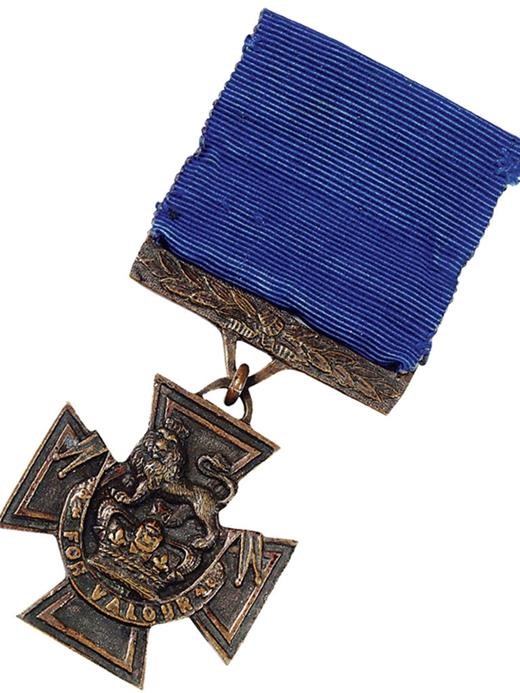
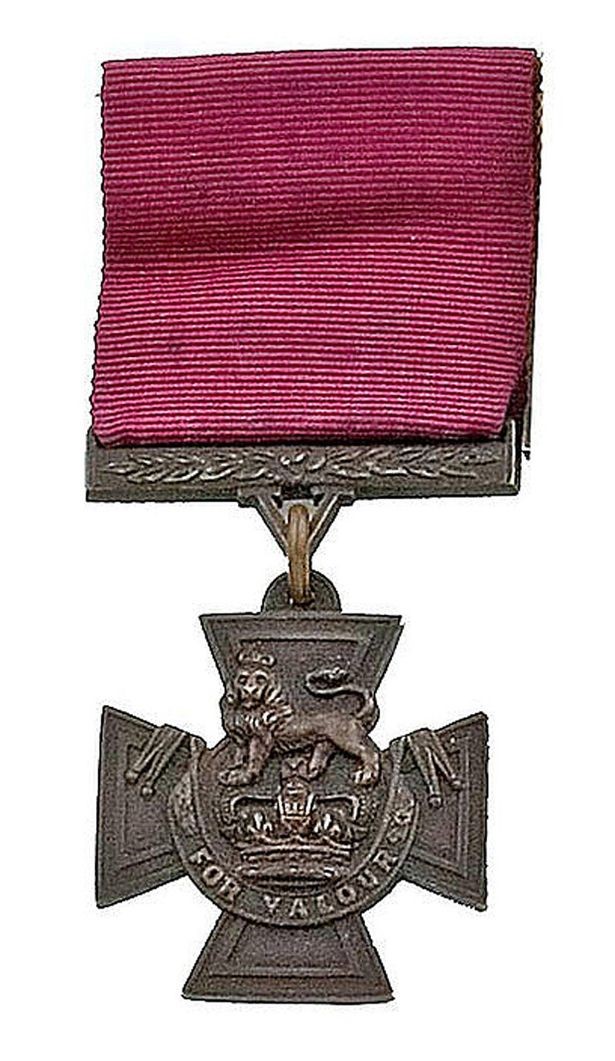
and designated ‘THE VICTORIA CROSS' and shall consist of a Maltese Cross of
bronze with Our Royal Crest in the centre and underneath which, an inscroll
bearing the inscription, ‘For Valour'.
Secondly: It is ordained that the Cross shall be suspended
from the left breast by a blue riband for the navy, and by a red riband for the
army.
Thirdly: It is ordained that the names of those upon whom We may be pleased to confer the decoration shall be published in The London Gazette, and a registry thereof kept in the office of Our Secretary of State for War.
Fourthly: It is ordained that anyone who, after having received the Cross, shall again perform an act of bravery, which, if he had not received such Cross, would have entitled him to it, such further act shall be recorded by a Bar attached to the riband by which the Cross is suspended, and for every additional act of bravery an additional Bar may be added.
Fifthly: It is ordained that the Cross shall only be awarded
to those officers or men that have served Us in the presence of the enemy, and
shall have performed some signal act of valour or devotion to their country.
Sixthly: It is ordained, with a view to place all persons on
a perfectly equal footing in relation to eligibility for the decoration, that
neither rank, nor long service, nor wounds, nor any other circumstance or
condition whatsoever, save the merit of conspicuous bravery, shall be held to
establish a sufficient claim to the honour.
There were other conditions but the six above capture the
main elements of The Royal Warrant of 29 January 1856. The Award of the
Victoria Cross could be made to all Ranks and Services for ‘extreme bravery in
the face of the enemy’.
Since the inception of the VC, there have been 14 further
Royal Warrants that have changed the original terms and conditions set out for
awards. Recognising the bravery of civilian volunteers during the Indian Mutiny
(1857-59), an 1858 warrant extended the eligibility of the VC to ‘non-military
persons’ serving with the forces.
The George Cross (GC) is the highest award bestowed by the
British government for non-operational gallantry or gallantry not in the
presence of an enemy. It was only established on 24 September 1940.
A specimen design for the Victoria Cross was approved on 3
March 1856 – it was to be made from metal with no intrinsic value. There has
been much debate about the source of the metal used. The most accepted source
of metal is that of cascabels from 2
cannons captured from the Russians at Sebastopol during the Crimean War.
The medal has always been made by Hancocks of London since 1856 and more information about its manufacture etc can be found on their site at:
https://www.hancocks-london.com/about-us/victoria-cross/.
Sources suggest that there is only sufficient metal now held
to make between 80 and 85 medals. This may not be as critical as first seems.
As the nature of warfare has changed over the decades there are much less hand
to hand, face to face operations. The situations that may typically have
created the circumstances for extreme bravery in presence of the enemy are very
much reduced. There have only been 18 Awards since the end of World War 2.
All announcements, like that of Robert Anderson Dunsire VC,
are made in The London Gazette. The first 85 servicemen to receive the award
and medal were announced on 24 February 1857 and the first Investiture by Queen
Victoria was held in Hyde Park, London on 26 June 1857.
The dark blue ribbon was withdrawn after the formation of
the RAF on 1 April 1918. King George V signed a Warrant on 22 May 1920 stating
all ribbons would be the original Army Ribbon colour of Red.
Originally, all NCOs and Private soldiers or seamen were
entitled to a £10 Annuity. There is no record that I can find that proves that
Robert Anderson Dunsire VC ever received such a payment.
a). The latest annuity of £2129 was paid with effect from 7
April 2014 and increases each year in line with other pension increases
(currently increased by CPI). It is exempt from Tax.
b. The annuity is paid annually in arrears on the
anniversary of the act of bravery for which the recipient is honoured.
c. The annuity is paid for life, however, if an individual
who is in receipt of the VC dies before the annuity is payable for that year,
nothing is payable for that year.
See: https://assets.publishing.service.gov.uk/government/uploads/system/uploads/attachment_data/file/